How Much Does a Heat Pump Cost in the UK? (2026)
By Rob Hammond · Updated September 2026 · How we score
PowerGuide is reader-supported. We may earn a commission from links on this page. It never affects our rankings or what we recommend. Learn more
The honest headline: the median air source heat pump installation in England and Wales cost £13,041 in 2025/26, and the £7,500 Boiler Upgrade Scheme grant comes off that, leaving a median of about £5,541. Here is where those numbers come from, what moves them, and whether the running costs justify the switch.
What an installation actually costs
The best UK data on this isn’t installer marketing: it’s the Boiler Upgrade Scheme’s own records. Nesta’s analysis of four years of BUS data, published 30 April 2026, reports that the median cost of an air source heat pump installation in real terms “including the unit cost, installer fees and associated home upgrade costs” rose from £12,973 to £13,041 in 2025/26, a 0.4% increase, against an 11% real-terms fall since the scheme launched in 2022. The scheme supported 30,600 air source heat pumps in 2025/26, up from 24,700.
That is the total cost of the job before the grant is deducted. It is not what you pay.
For comparison, the fully-installed prices we hold for the units in our catalogue, before any grant. These are indicative catalogue estimates, not sourced figures. Unlike the £13,041 scheme median above, they do not come from published data, so use them to compare units against each other rather than as prices to hold an installer to:
| Heat pump | Output | SCOP | Installed price (pre-grant) |
|---|---|---|---|
| Octopus Cosy 6 | 6kW | 4.1 | £9,500 |
| Grant Aerona3 | 6kW | 3.7 | £10,500 |
| Vaillant aroTHERM Plus | 7kW | 4.0 | £11,000 |
| Mitsubishi Ecodan | 8.5kW | 3.9 | £11,500 |
| Daikin Altherma 3 | 8kW | 3.8 | £12,000 |
Those sit at or below the scheme median, which is what you’d expect: the median includes the jobs that needed a cylinder, new radiators and a rewire.
What the grant leaves you paying
GOV.UK sets the Boiler Upgrade Scheme grants in England and Wales at:
- £7,500 towards an air source heat pump
- £7,500 towards a ground source heat pump. Our ground source heat pump cost guide works through what that leaves against Nesta’s £21,000 average install, and why the running-cost gain does not repay the difference
- £5,000 towards a biomass boiler
- £2,500 towards an air-to-air heat pump
Properties heated by oil or LPG with no mains gas connection get an extra £1,500 towards an air or ground source heat pump, £9,000 in total, and that uplift is available until March 2027. GOV.UK does not publish an end date for the main scheme.
So, against the £13,041 scheme median:
- On gas, replacing a gas boiler: £5,541
- Off-gas, replacing oil or LPG, before March 2027: £4,041
Both figures are approximate, and deliberately so: £13,041 is an inflation-adjusted median, while £7,500 is a cash grant, so subtracting one from the other is a useful estimate rather than an exact arithmetic. Treat it as “somewhere around five and a half thousand”, not a quote.
Our Boiler Upgrade Scheme guide goes through the eligibility wording, the 120-day commissioning rule and Ofgem’s uptake figures in full.
You never handle the money. Your MCS-certified installer applies to Ofgem on your behalf and the grant is taken off the amount you pay, shown on your quotation and invoice.
In Scotland, BUS does not apply. Home Energy Scotland offers a grant of up to £7,500 plus an interest-free loan of up to £7,500 for a heat pump providing all of a home’s heating and hot water, with a £1,500 rural uplift taking the grant to £9,000 for eligible rural and island homes.
There is also no VAT. HMRC zero-rates air source heat pump installation in residential accommodation until 31 March 2027, after which it returns to the 5% reduced rate.
Who can’t get the grant
Worth checking before you get attached to the idea. You must own the property and be replacing a fossil fuel system: oil, gas, electric or LPG. Most new builds, social housing and properties already receiving government heat pump funding are excluded, and biomass is limited to rural, off-gas properties. Your installer must commission the system within 120 days of applying (GOV.UK eligibility).
Our suitability checker walks through whether your property is a sensible candidate before you start collecting quotes.
What drives the price
The unit is rarely the biggest line. In rough order of impact:
- Output (kW). Sizing follows a heat loss calculation, not floor area. A well-insulated three-bed may need 5–6kW; a draughty Victorian semi may need 12kW and a different unit entirely.
- Radiators and pipework. A heat pump runs at a lower flow temperature than a boiler, so radiators that were adequate at 70°C may not be at 45°C. This is where quotes diverge most. Units that hold a high flow temperature, the aroTHERM Plus at 65°C and the Altherma 3 at 70°C, exist precisely to reduce this work in older properties.
- Hot water cylinder. If you’re coming off a combi you almost certainly need one, plus the space for it.
- Installer and region. The spread between three quotes for the same job is routinely larger than the spread between brands.
The running costs, worked honestly
This is where most guides wave at “300% efficient” and move on. The real numbers are tighter.
The efficiency figure to use. The DESNZ-funded Electrification of Heat demonstration project monitored 428 air source heat pumps in real British homes and found a median SPFH4 of 2.78, with an interquartile range of 2.55 to 3.05. Not the 4.0+ SCOP on the datasheet: SCOP is a laboratory figure, SPFH4 is what a whole system delivered in a real house over a year. Units using R290 or R32 refrigerant did better, at a median SPFH4 of 2.86, against 2.66 for older R410a units.
One caveat in the heat pump’s favour: these were early adopters, and the same report notes that ASHP performance improved by 0.24 to 0.4 on the SPF measures against the 2017 RHPP trial. A 2026 install by a competent installer has a fair chance of sitting above 2.78.
The boiler figure to use. The best in-situ measurement of real British boilers remains In-situ monitoring of efficiencies of condensing boilers and use of secondary heating, June 2009, prepared by GASTEC at CRE, AECOM and EA Technology for the Energy Saving Trust (final report). It measured a mean annual efficiency of 82.5% (standard deviation 4.0) across 31 combination boilers, against a mean SEDBUK rating of around 90%.
That is a small, seventeen-year-old sample, and its authors note it was not a random sample of the UK housing stock, so treat it as indicative, not definitive. It is worth being clear about which way the uncertainty cuts: a higher real boiler efficiency would make the heat pump look worse, not better, because the same gas would be delivering more heat. We have used the number that is least flattering to our own conclusion.
The prices. Ofgem’s cap for 1 October to 31 December 2026 sets the average direct-debit rates at 26.32p/kWh for electricity (54.83p/day standing charge) and 7.97p/kWh for gas (29.68p/day standing charge) (Ofgem). The government removed VAT from domestic electricity from 1 October 2026 to 31 March 2027, which is why the electricity rate looks flat year on year (Ofgem).
The household. Ofgem’s medium typical domestic consumption value, updated 1 July 2026, is 9,500kWh of gas a year.
Now the arithmetic:
- Gas today: 9,500kWh × 7.97p = £757, plus £108 of standing charge = £865 a year.
- At 82.5% boiler efficiency, that gas delivers 7,838kWh of heat.
- A median heat pump (SPFH4 2.78) needs 7,838 ÷ 2.78 = 2,819kWh of electricity.
- At 26.32p that is £742 a year, and you can drop the gas standing charge.
Saving: about £123 a year. Run it again across the interquartile range:
- Top-quartile install (SPFH4 3.05): £189 a year cheaper than gas.
- Bottom-quartile install (SPFH4 2.55): £57 a year cheaper, and if you keep a gas hob, so keep paying the gas standing charge, it’s about £52 a year worse.
Where the break-even sits depends on whether you can get rid of the gas supply altogether. If you can, and the £108 standing charge goes with it, a heat pump beats the boiler at any SPFH4 above about 2.38. If you keep a gas hob and go on paying that standing charge, the break-even is an SPFH4 of 2.72, against a measured median of 2.78. That is the whole story in two numbers, and it is why install quality is the thing to spend your attention on.
And this is the flattering version, because electricity is temporarily VAT-free. The zero rate on domestic electricity runs only to 31 March 2027. When 5% VAT returns, 26.32p becomes 27.64p, while the gas rate, which already includes its 5%, does not move. Re-run the same arithmetic:
| Install | Saving vs gas, now | From 1 April 2027 |
|---|---|---|
| Top quartile (SPFH4 3.05) | £189 | £155 |
| Median (SPFH4 2.78) | £123 | £86 |
| Bottom quartile (SPFH4 2.55) | £57 | £16 |
| Median, keeping a gas hob | £15 | −£22 |
| Bottom quartile, keeping a gas hob | −£52 | −£92 |
Both break-evens move up: to 2.50 if you cap off the gas, and to 2.86 if you keep it for a hob. That second figure is above the measured median of 2.78, and is exactly the level the report found for R290 and R32 units. From April 2027, on these rates, a household that keeps its gas supply needs a genuinely good install to be ahead on running costs at all.
Two things fall out of that. The first is that install quality matters more than brand: the difference between a top-quartile and a bottom-quartile SPFH4 is worth more per year than the difference between any two units in the table above. The second is that at the price cap, running costs alone do not pay back the £5,541 the grant leaves on the table. A heat pump’s case is the grant closing the gap against a boiler replacement you were going to make anyway, plus lower carbon, not a fuel-bill windfall.
Put your own gas consumption in. The calculator starts on the median case above and has the “keeping a gas hob” toggle, which is the single input that flips the answer:
Measured in real UK homes: bottom quartile 2.55, median 2.78, top quartile 3.05. A datasheet SCOP of 4+ is a laboratory figure.
Break-even SPF at these prices: 2.38. A heat-pump tariff (e.g. Cosy Octopus) lowers the effective electricity price and moves this in the heat pump's favour.
Enter a postcode for your region's electricity rates. Cosy Octopus rates for your region.
The thing that changes the answer
The cap rate is not the only electricity price available. Heat pump tariffs such as Cosy Octopus split the day into cheap and peak windows specifically so a heat pump can pre-heat the house on the cheap rate. Octopus publishes the windows, off-peak 04:00–07:00, 13:00–16:00 and 22:00–00:00 and peak 16:00–19:00, but the unit rates are regional and only shown after a postcode check, so we aren’t going to quote a national number we can’t source. Do the postcode check for your own area before you decide; on the arithmetic above, a few pence off the average unit rate is worth more than any difference between the units in our table.
When a heat pump isn’t the right answer yet
- Your heat loss is very high and untreated. A heat pump sized for an uninsulated house is a big, expensive heat pump running at a poor SPF. Insulation first, always.
- You’d have to keep the gas supply anyway. A gas hob or fire keeps the 29.68p/day standing charge, which is £108 a year, most of the running-cost saving on a median install.
- Your boiler is three years old and working. The grant will still be there; a scrapped boiler won’t come back.
- You rent, or you’re selling within a couple of years. The grant requires you to own the property, and the capital is not recovered in the running costs on this timescale.
Compare the units on our air source heat pumps page, and check what else you might qualify for on the grants page.
All prices, grant levels and tariff rates were checked on 20 September 2026. The price cap is reset quarterly and grant levels change, so re-check before committing.
What’s changed (changelog)
- 20 September 2026 (third revision, same day). Labelled the catalogue installed-price table as indicative estimates rather than sourced figures, so it is not read alongside the £13,041 scheme median as though both came from published data.
- 20 September 2026 (revised same day). Added the post-April-2027 running costs, when 5% VAT returns to domestic electricity and the median saving falls from £123 to £86; corrected the attribution, date and sample size of the boiler efficiency figure (June 2009, 31 combi boilers, prepared for the Energy Saving Trust by GASTEC at CRE, AECOM and EA Technology); noted that the Electrification of Heat cohort were early adopters whose measured SPFs had already risen 0.24 to 0.4 on the previous trial; and flagged that subtracting a cash grant from an inflation-adjusted median gives an approximate net cost.
- 20 September 2026. Rewritten around sourced figures: the BUS scheme median install cost from Nesta’s analysis, the GOV.UK grant table including the £1,500 off-gas uplift, the Electrification of Heat median SPFH4, and a worked running-cost comparison at the October 2026 price cap. The previous version’s “£8,000–£14,000 before grants / £500–£6,500 after” range and its ground source figures were unsourced and have been replaced or removed.
FAQs
How much is a heat pump after the grant?
The median air source heat pump installation under the Boiler Upgrade Scheme cost £13,041 in 2025/26 (Nesta's analysis of the scheme data, inflation-adjusted, including the unit, installer fees and associated home upgrades). The £7,500 grant is deducted from that quote, leaving a median of about £5,541, approximate because that subtracts a cash grant from an inflation-adjusted median. Off-gas homes replacing oil or LPG get £9,000 until March 2027, leaving about £4,041.
Why do heat pump prices vary so much?
Nesta's analysis of Boiler Upgrade Scheme data shows the median install has fallen 11% in real terms since the scheme launched in 2022, but the spread between installs remains wide, driven by the output needed, how much radiator and pipework upgrading the property requires, whether a hot water cylinder has to be added, and the installer. Get three quotes; the variation between them is larger than the variation between brands.
Is a heat pump cheaper to run than a gas boiler?
Marginally, at the October 2026 price cap, and only if the install is a good one. On the worked example below a median-performing heat pump (SPFH4 2.78) saves about £123 a year against a gas boiler, and a bottom-quartile install that still pays a gas standing charge for a hob is about £52 a year worse off. That is also the flattering version: domestic electricity is temporarily VAT-free until 31 March 2027, and when 5% returns the median saving falls to about £86. A heat-pump tariff changes this materially in the heat pump's favour.
Do I pay VAT on a heat pump installation?
No. HMRC zero-rates the installation of air source heat pumps in residential accommodation until 31 March 2027, after which it returns to the 5% reduced rate.
Sources
- Ofgem: energy price cap unit rates, 1 Oct–31 Dec 2026 · checked 20 Sept 2026
- Ofgem: price cap will rise 4% from October 2026 (VAT removal) · checked 20 Sept 2026
- HMRC: VAT Notice 708/6 · checked 20 Sept 2026
- Nesta: Four years of the Boiler Upgrade Scheme in four charts · checked 20 Sept 2026
- GOV.UK: Boiler Upgrade Scheme: what you can get · checked 20 Sept 2026
- GOV.UK: Boiler Upgrade Scheme: eligibility · checked 20 Sept 2026
- Home Energy Scotland: grants and loans · checked 20 Sept 2026
- Energy Systems Catapult: Electrification of Heat: performance data analysis · checked 20 Sept 2026
- EST / GASTEC at CRE: In-situ monitoring of condensing boilers (2009) · checked 20 Sept 2026
- Octopus Energy: Cosy Octopus · checked 20 Sept 2026
Related products
Octopus Cosy 6
Octopus's own 6kW R290 heat pump, usually fitted by Octopus, and with the £7,500 grant the all-in price often lands close to a new gas boiler.
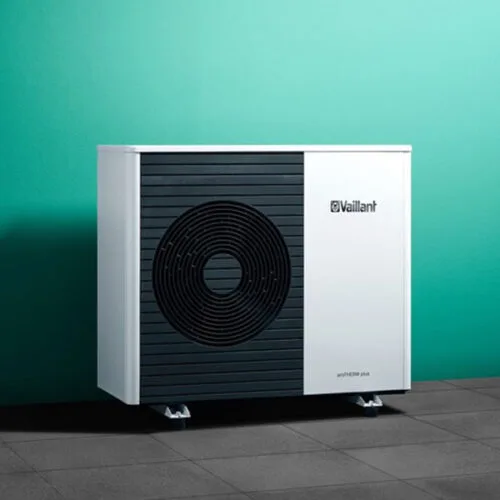
Vaillant aroTHERM Plus
One of the most efficient heat pumps on UK sale: natural R290 refrigerant, 65°C flow temperature and a class-leading SCOP, well suited to retrofits.
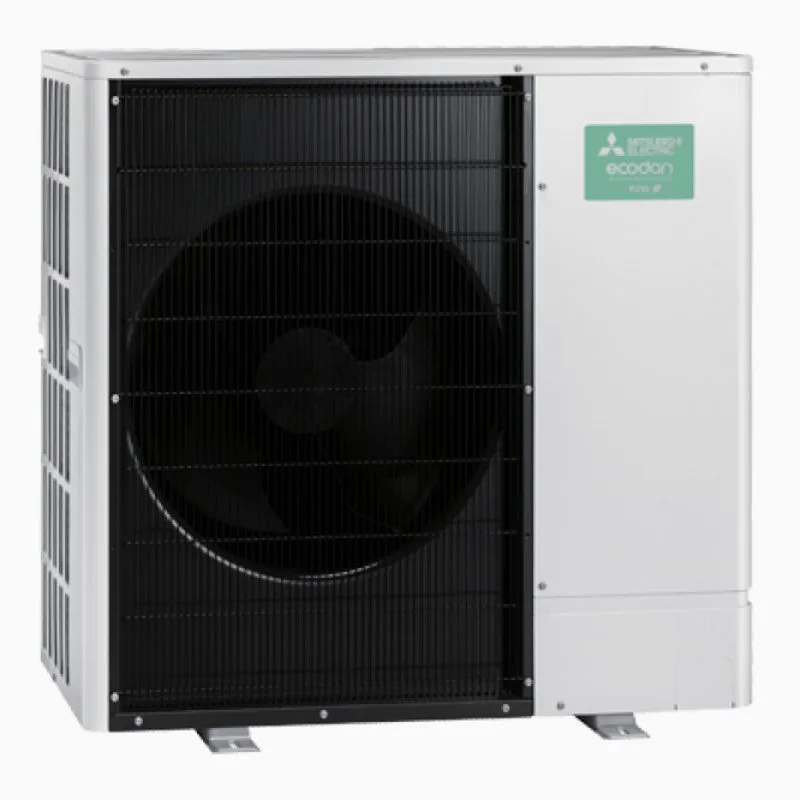
Mitsubishi Ecodan
The UK's most-installed heat pump, with proven reliability and the deepest installer network, now with an efficient R290 model.
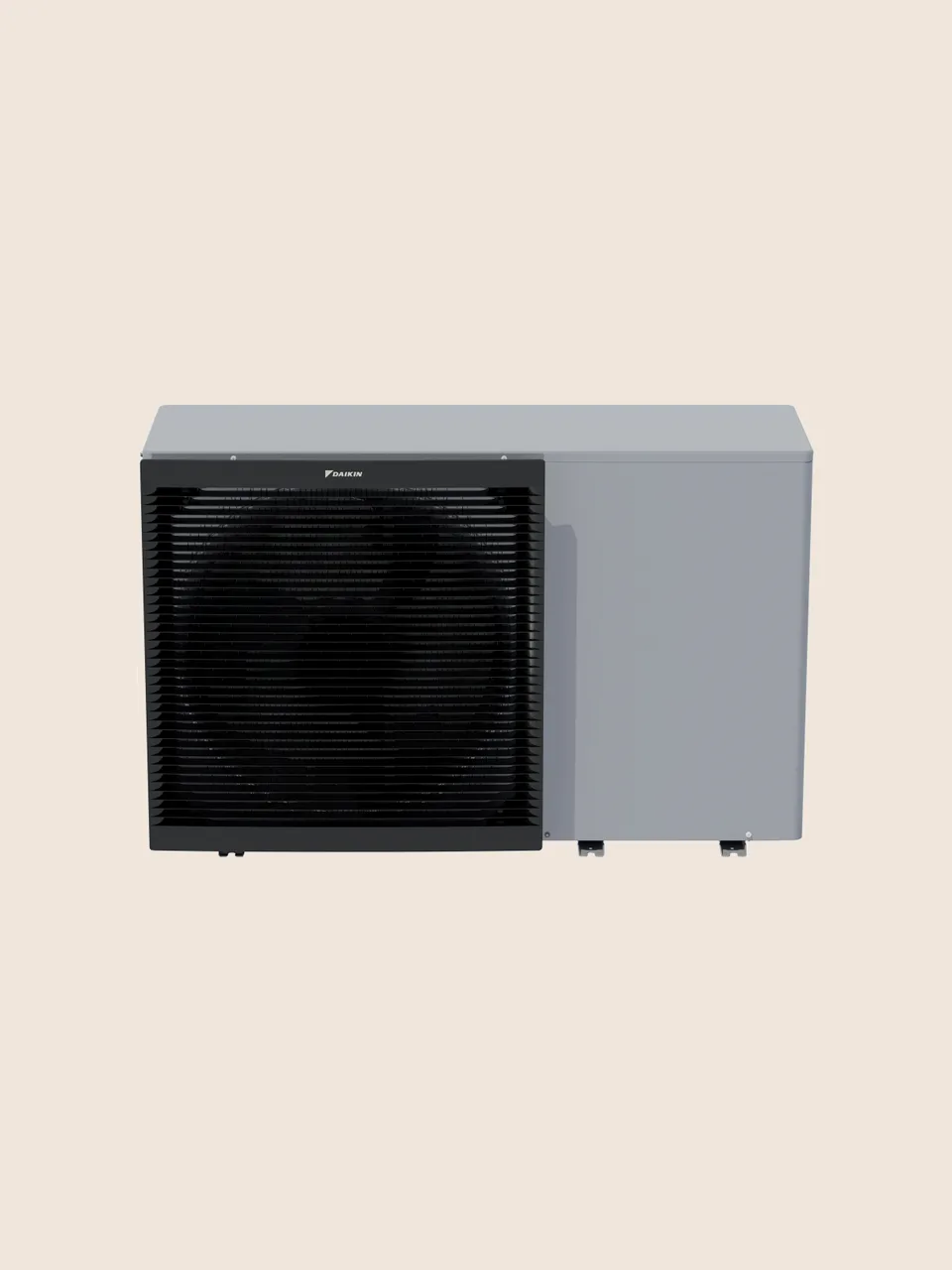
Daikin Altherma 3
Delivers up to 70°C flow even in deep cold, making it a strong choice for older homes with existing radiators and high demand.
Related guides
- The Boiler Upgrade Scheme Explained (UK 2026)
£7,500 towards a heat pump in England and Wales, £9,000 off-gas until March 2027: who qualifies, how the money reaches you, and what Ofgem's own figures say about uptake.
- Ground Source Heat Pump Cost (UK 2026)
Nesta puts the average MCS-certified ground source install at around £21,000. Here is what the £7,500 grant leaves, borehole versus trench, and the measured running costs.
- Heat Pump vs Gas Boiler: Which Is Cheaper in 2026?
An honest comparison of heat pumps and gas boilers on running cost, upfront price, comfort and carbon, and when each one wins.