What Size Power Station Do I Need? (UK 2026)
By Rob Hammond · Updated September 2026 · How we score
PowerGuide is reader-supported. We may earn a commission from links on this page. It never affects our rankings or what we recommend. Learn more
Sizing a power station is not one number, it is three: the watt-hours it stores, the watts it can deliver continuously, and the surge watts it can deliver for a second or two when a motor starts. A unit that fails any one of the three is the wrong unit, and the commonest mistake, buying on watt-hours alone, is what leaves people with a 1kWh box that cannot boil a kettle. Everything below is computed with the same library that runs our power station sizing calculator, so the two agree.
The three checks, exactly as the calculator applies them
Our sizing library (src/lib/sizing.ts) does this and nothing cleverer:
- Energy. It adds up
watts × quantity × hoursfor everything on your list, then multiplies by 1.15. That 15% is a fixed allowance for inverter and conversion losses. The library calls itLOSS_FACTORand it is0.15. So a 1,050Wh load becomes a 1,208Wh requirement. - Continuous output. It adds up
watts × quantityfor everything at once, the peak, and requires the unit’s rated AC output to meet or beat it. No margin is added here. - Surge. It adds up each appliance’s start-up surge where one is defined and its running wattage where one isn’t, and requires the unit’s surge rating to cover the total. Where a product has no published surge figure, the library falls back to its continuous output, which is the conservative reading.
A unit “fits” only if all three pass. Runtime is worked out separately: usable energy is capacity × (1 − 0.15), divided by your peak watts. That assumes everything runs simultaneously and continuously, so treat the runtime figures below as a floor.
Step 1: what you want to run, and what it draws
These are the figures our calculator uses. Most are typical values, not measurements of your appliance, so check your own label or manual, because the spread within a category is wide. Where a manufacturer publishes a comparable number we’ve put it alongside.
| Appliance | Calculator wattage | Start-up surge | Manufacturer figure for comparison |
|---|---|---|---|
| Phone charge | 15W | n/a | typical |
| Wi-Fi router | 15W | n/a | BT Smart Hub 2: 14.10W in operation |
| LED lights | 40W | n/a | typical |
| CPAP machine | 60W | n/a | ResMed AirSense 11: 56.1W typical, 73.2W peak |
| Laptop | 70W | n/a | typical |
| TV | 80W | n/a | typical |
| Fridge / freezer | 150W | 600W | see the note below |
| Microwave | 1,000W | n/a | typical |
| Coffee machine | 1,200W | n/a | typical |
| Hairdryer | 1,500W | n/a | typical |
| Kettle | 2,000W | n/a | Russell Hobbs: 2,400W–3,000W |
| Electric heater | 2,000W | n/a | typical |
Two of those deserve a caveat.
The fridge is deliberately pessimistic. Bosch’s product fiche for the KGN39VL3AG fridge-freezer gives 273 kWh/annum, which averages 31W across the year. Our 150W is the compressor’s draw while it is running, and a fridge compressor cycles. Multiplying 150W by six hours assumes it never stops, so the energy figure is a worst case, and deliberately so, because you would rather have headroom than a warm freezer. The 600W surge is the number that actually decides which units pass.
The kettle is at the bottom of the UK range. Russell Hobbs’ own listings run from 2,400W on the Honeycomb to 3,000W on the Calm. Our calculator’s 2,000W kettle is therefore the most generous assumption you could make about a British kitchen, and if yours is a 3kW model every “just passes” result below turns into a fail.
Step 2: does the output cover your biggest load?
This is the check that eliminates most units, and it has nothing to do with capacity. Take the 2,000W kettle against four real catalogue units, with the manufacturers’ own figures:
| Unit | Rated AC output | Manufacturer’s boost/surge figure | Runs a 2,000W kettle? |
|---|---|---|---|
| Bluetti AC70 | 1,000W | 1,500W surge; 2,000W “Power Lifting” mode | No |
| EcoFlow DELTA 3 | 1,800W | 3,600W surge; 2,400W max via X-Boost | No |
| Anker SOLIX C1000 Gen 2 | 2,000W | 3,000W peak | Yes, with nothing spare |
| EcoFlow DELTA Pro 3 | 4,000W | 8,000W surge; 6,000W via X-Boost | Yes |
A boost mode is not the same as rated output. EcoFlow’s X-Boost and Bluetti’s Power Lifting both work by lowering the voltage delivered to the appliance, which is fine for a resistive load like a kettle or a heater and unsuitable for anything with electronics that expect 230V. EcoFlow states the DELTA 3’s X-Boost ceiling as 2,400W against a rated 1,800W; Bluetti gives the AC70 1,000W rated and 2,000W lifting. Our calculator ignores both and sizes on the rated figure, because that is the number the manufacturer stands behind. If you intend to rely on a boost mode, read its restrictions on the product page first.
The surge check, worked. Give a fridge its 600W start-up, add a 15W router and two 15W phone
chargers, and the surge total is 645W. The DELTA 3 publishes no surge_w figure in our
catalogue, so the library tests 645W against its 1,800W continuous rating, and it passes. The AC70’s
1,000W also covers 645W. So surge is rarely what stops a mid-size unit; capacity usually is,
which is the next step.
Step 3: sizing the capacity
Three scenarios, each run through computeLoad and then through the catalogue with
productFits. The arithmetic is shown so you can swap your own hours in.
Camping weekend, one day. Two phone charges (15W, 2h each), a laptop (70W, 4h), LED lights (40W, 5h) and a router (15W, 8h):
- 60 + 280 + 200 + 120 = 660Wh, ×1.15 = 759Wh required
- Peak (everything at once): 155W. Surge: 155W.
Six-hour power cut, essentials. Fridge (150W, 6h), router (15W, 6h), two phone charges (15W, 2h each):
- 900 + 90 + 60 = 1,050Wh, ×1.15 = 1,208Wh required
- Peak: 195W. Surge: 645W.
Twenty-four-hour cut. Fridge (150W, 24h), router (15W, 24h), LED lights (40W, 6h), two phone charges, a laptop (70W, 4h):
- 3,600 + 360 + 240 + 60 + 280 = 4,540Wh, ×1.15 = 5,221Wh required
- Peak: 305W. Surge: 755W.
Now the catalogue, at indicative catalogue estimates for price:
| Scenario (required Wh) | Unit | Capacity | Fits? | Runtime at peak |
|---|---|---|---|---|
| Camping, 759Wh | Bluetti AC70, £449 | 768Wh | Yes, 9Wh to spare | 4.2h |
| Camping, 759Wh | EcoFlow DELTA 3, £399 | 1,024Wh | Yes | 5.6h |
| 6-hour cut, 1,208Wh | EcoFlow DELTA 3, £399 | 1,024Wh | No, 184Wh short | 4.5h |
| 6-hour cut, 1,208Wh | Bluetti Elite 200 V2, £999 | 2,073.6Wh | Yes | 9.0h |
| 24-hour cut, 5,221Wh | EcoFlow DELTA Pro 3, £2,499 | 4,096Wh | No, 1,125Wh short | 11.4h |
| 24-hour cut, 5,221Wh | EcoFlow DELTA Pro Ultra, £4,299 | 6,144Wh | Yes | 17.1h |
Three things fall out of that table.
The 1kWh class is a camping size, not a power-cut size. The DELTA 3 and the Anker SOLIX C1000 Gen 2 both hold 1,024Wh and both fail the six-hour fridge scenario: not on output, not on surge, but by 184Wh of capacity. A day’s camping is comfortably within them; six hours of fridge is not.
Runtime and scenario hours are different questions. The DELTA 3 shows 4.5 hours of runtime against the six-hour load, because runtime assumes every appliance runs flat out. It is under the six hours either way, which is why it doesn’t fit, but don’t read a runtime figure as a prediction of how long your fridge will stay cold.
Twenty-four hours is a big, expensive number. Only the DELTA Pro Ultra covers it on a single unit, at £4,299. If that is genuinely your requirement, read the last section before you buy.
Put your own appliances and hours in on the power station sizing calculator, which filters the whole catalogue on all three checks and shows an estimated runtime for each unit that passes. It’s linked rather than embedded here because it needs the catalogue’s product list to filter against.
Quick guidance by use case
- Phones, laptop and lights for a weekend. 750Wh and up. The Bluetti AC70 (768Wh, 1,000W, 10.2kg) clears the 759Wh camping load by nine watt-hours, which is fine, but leave yourself room if your hours run longer.
- A day off-grid with a fridge or power tools. 1kWh and ~1,800–2,000W. The EcoFlow DELTA 3 (1,024Wh, 1,800W, 12.1kg) or the Anker SOLIX C1000 Gen 2 (1,024Wh, 2,000W, 11.3kg), and the Anker is the one that reaches a 2,000W kettle.
- A power cut with the fridge running. ~2kWh. The Bluetti Elite 200 V2 (2,073.6Wh, 2,600W) is the smallest unit in our catalogue that passes the six-hour scenario.
- Longer cuts, or a heat-pump-adjacent load. 4kWh+ and expandable. The EcoFlow DELTA Pro 3 (4,096Wh, 4,000W, surge 8,000W) takes two extra batteries; the DELTA Pro Ultra is the only single unit here that covers a full day of essentials.
The full field is on our power stations hub, broken down into portable power stations and home-backup power stations, with our rankings at best portable power stations and best home-backup power stations.
Don’t over-buy, and when the answer is no
Weight is a spec. The AC70 is 10.2kg and the C1000 Gen 2 is 11.3kg, both a one-handed carry. The DELTA Pro 3 is 51.5kg and the DELTA Pro Ultra is 82.4kg. Those are not portable in any useful sense; they are appliances you install somewhere and leave. A 768Wh unit you actually take camping beats a 4kWh one that lives in the garage.
If your cuts are frequent and long, a power station is the wrong product. Ofgem’s guaranteed standards require network operators to restore supply within 12 hours outside severe weather, 24 hours in a category 1 storm and 48 hours in a category 2 storm. We can’t find an official published figure for how long a typical British power cut actually lasts, so we are not going to invent one, but those regulatory limits are the shape of the problem, and a 24-hour scenario needs £4,299 of power station. If you lose supply often, a home battery with a backup gateway does the same job automatically, at whole-house scale, and earns money the rest of the year by shifting cheap overnight electricity. Our are solar batteries worth it? guide works that arithmetic through, including the cases where it fails, and how much battery storage do I need sizes one.
Check you can refill it between cuts. EcoFlow states the DELTA 3 charges 0–80% in 45 minutes and 0–100% in 60 minutes; Bluetti gives the AC70 0–80% in 45 minutes at up to 950W; Anker gives the C1000 Gen 2 a full charge in 49 minutes at 1,600W input. All three are fast enough to be topped up in a lull. If you are sizing for a series of cuts rather than one, the recharge figure matters as much as the capacity.
You may not need to power the fridge at all. Bosch quotes a 16-hour temperature rise time for that KGN39VL3AG: the time a full freezer stays safe with the door shut and no power. Leave it closed and a short cut costs you nothing, which takes the single largest load off your list and can drop you a whole size class.
All prices, rates and figures were checked on 21 September 2026. Manufacturer specifications change between model revisions, so re-check the product page before committing.
What’s changed (changelog)
- 21 September 2026. Rebuilt on the catalogue and the sizing library. Every wattage,
capacity, runtime and fit verdict is now either a manufacturer figure or computed with
computeLoad/productFits/estimateRuntimeHours, replacing the round numbers the previous version used; added the surge check, the boost-mode caveat, the appliance table with manufacturer comparisons, and the section on when a power station is the wrong answer. - 21 September 2026. Linked the sizing steps to the calculator that implements them (capacity, continuous output and surge are all checked, not just watt-hours).
FAQs
What size power station do I need for a power cut?
For a fridge, a router and two phone charges over six hours, our sizing library computes 1,050Wh of load and 1,208Wh once a 15% loss allowance is added. That rules out every 1,024Wh unit in our catalogue, including the EcoFlow DELTA 3 and the Anker SOLIX C1000 Gen 2, and the smallest thing that passes all three checks is a ~2kWh unit such as the Bluetti Elite 200 V2 (2,073.6Wh).
Will a power station run a kettle?
Only if its continuous AC output is at least the kettle's wattage, and UK kettles are big. Russell Hobbs' own range runs from 2,400W (Honeycomb) to 3,000W (Calm). Against our calculator's 2,000W kettle, the Bluetti AC70 (1,000W) and the EcoFlow DELTA 3 (1,800W rated) both fail, the Anker SOLIX C1000 Gen 2 (2,000W) passes with nothing to spare, and the EcoFlow DELTA Pro 3 (4,000W) passes comfortably. A 3,000W kettle fails on all but the DELTA Pro 3.
What can a 1,024Wh power station run?
Our library treats 15% of the capacity as unavailable, so a 1,024Wh unit has about 870Wh usable. Against a 155W camping load (two phone charges, a laptop, LED lights and a router) that is 5.6 hours if everything runs at once. Against a 195W power-cut load it is 4.5 hours, but the same load over six hours needs 1,208Wh, so the unit runs out first.
How much bigger should the power station be than my load?
15% bigger in watt-hours. Our sizing library applies a fixed LOSS_FACTOR of 0.15 for inverter and conversion losses, so a 1,050Wh load is checked against a 1,208Wh requirement. The output and surge checks have no such margin: the unit's rated watts must simply meet or beat your peak.
Do I need to worry about start-up surge?
For anything with a motor, yes. Our calculator gives a fridge a 600W start-up surge against 150W running, and checks that against the unit's surge rating, or, where a manufacturer publishes no surge figure, against its continuous output, which is the conservative reading.
Sources
- EcoFlow UK: DELTA 3 Classic (1024Wh) product page and spec table · checked 21 Sept 2026
- EcoFlow UK: DELTA Pro 3 product page and spec table · checked 21 Sept 2026
- BLUETTI: AC70 Portable Power Station, tech specs · checked 21 Sept 2026
- Anker SOLIX: C1000 Gen 2 product page and spec table · checked 21 Sept 2026
- Russell Hobbs: Calm Quiet Boil Kettle (3000W) · checked 21 Sept 2026
- Russell Hobbs: Honeycomb Black Kettle (2400W) · checked 21 Sept 2026
- Bosch: product fiche, KGN39VL3AG fridge-freezer (273 kWh/annum) · checked 21 Sept 2026
- BT: Smart Hub 2 power consumption information · checked 21 Sept 2026
- ResMed: AirSense 11 user guide (UK/EU), technical specifications · checked 21 Sept 2026
- Ofgem: Plan for a power cut (guaranteed standards for restoration) · checked 21 Sept 2026
Related products
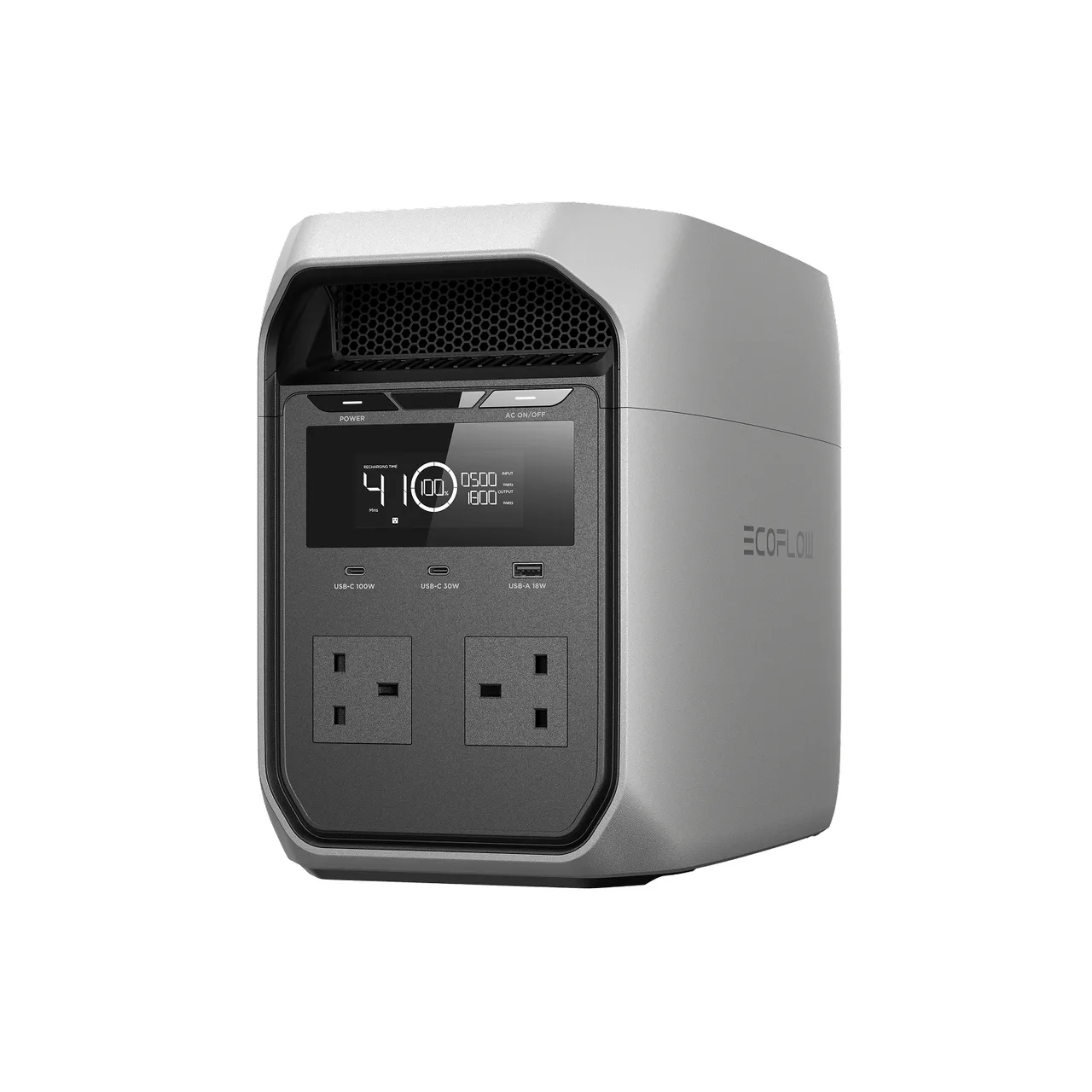
EcoFlow DELTA 3
The current DELTA 2 replacement: 1,024Wh with 1,800W continuous output (2,400W X-Boost), two AC outlets and 500W solar input.
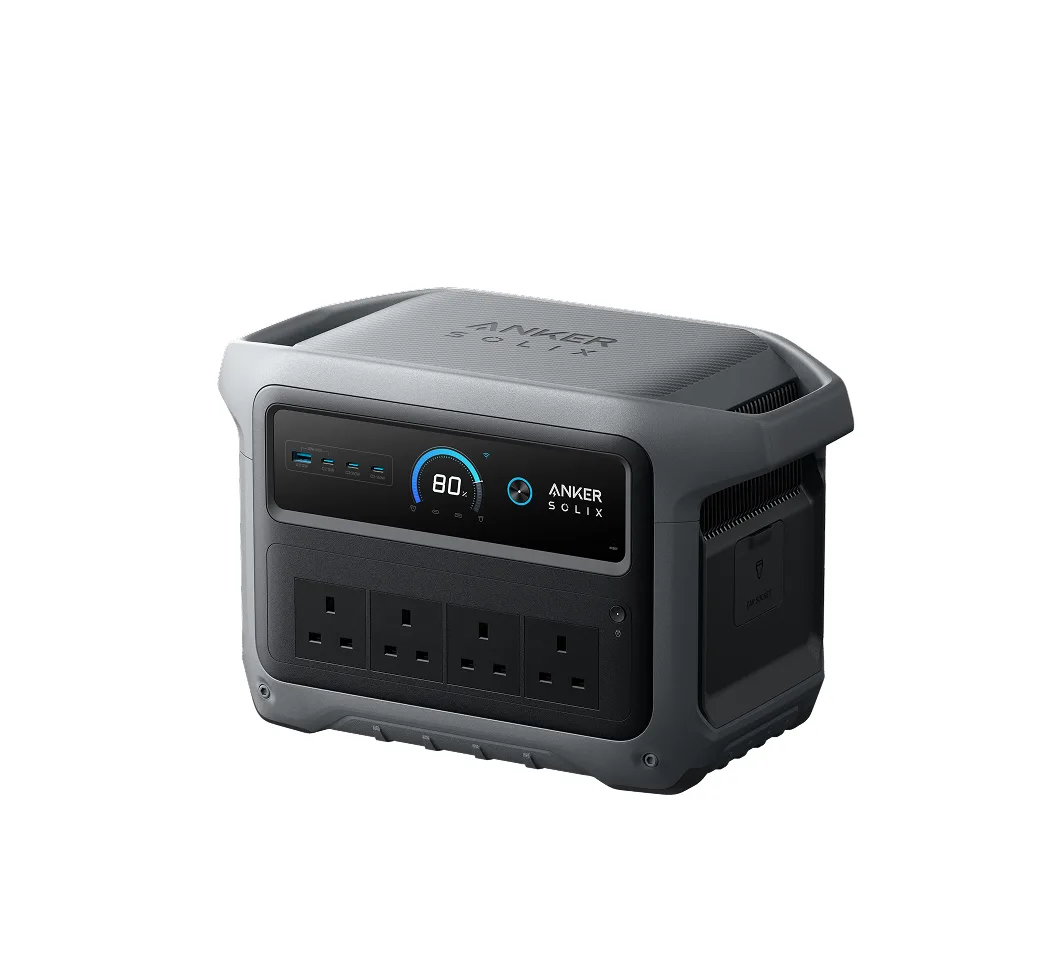
Anker SOLIX C1000 Gen 2
Anker's current 1kWh flagship: a Guinness World Record-certified fastest-recharging 1kWh power station, at 2,000W continuous output.
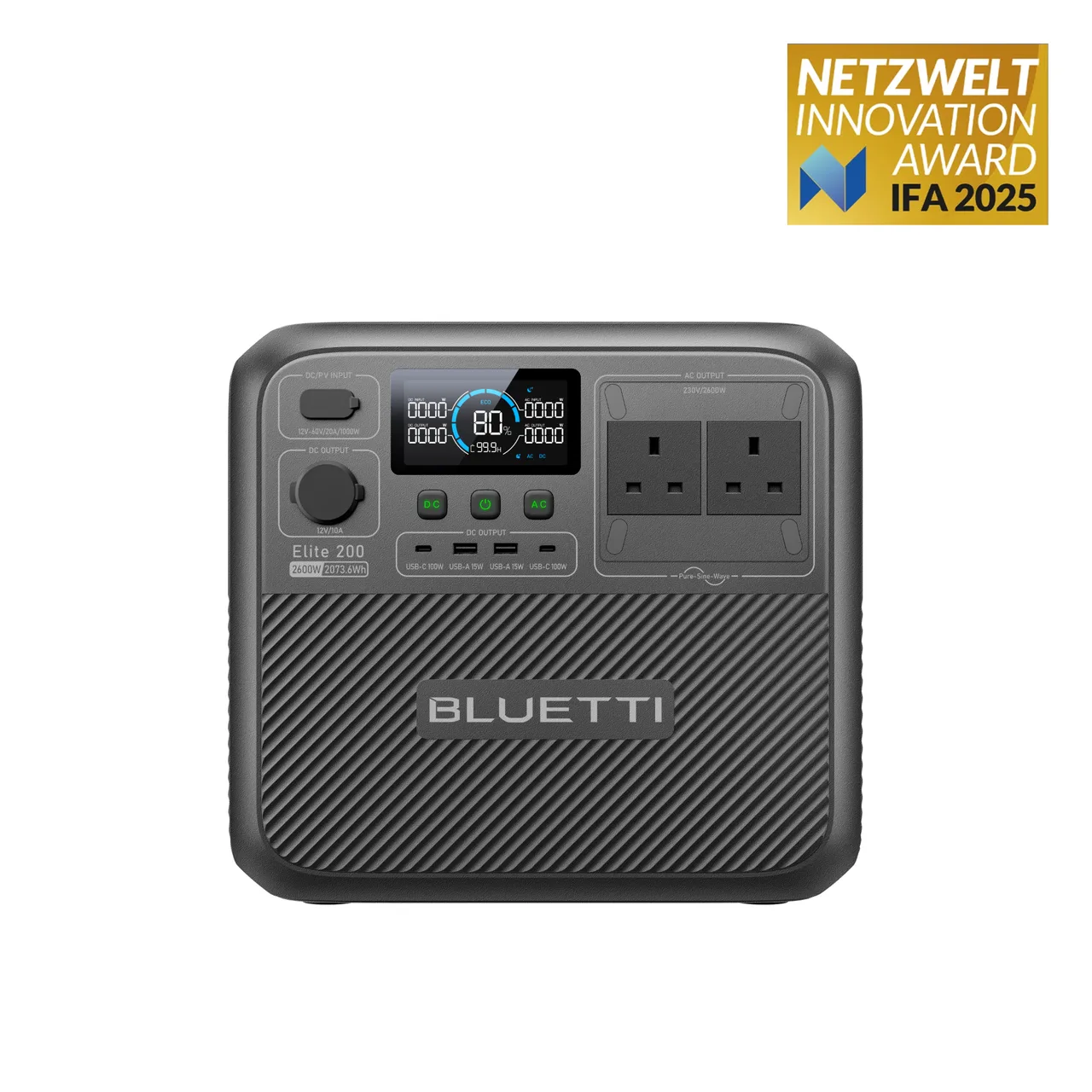
Bluetti Elite 200 V2
A 2,073.6Wh, 2,600W large portable with automotive-grade cells and a 6,000-cycle rating, Bluetti's biggest non-modular unit.
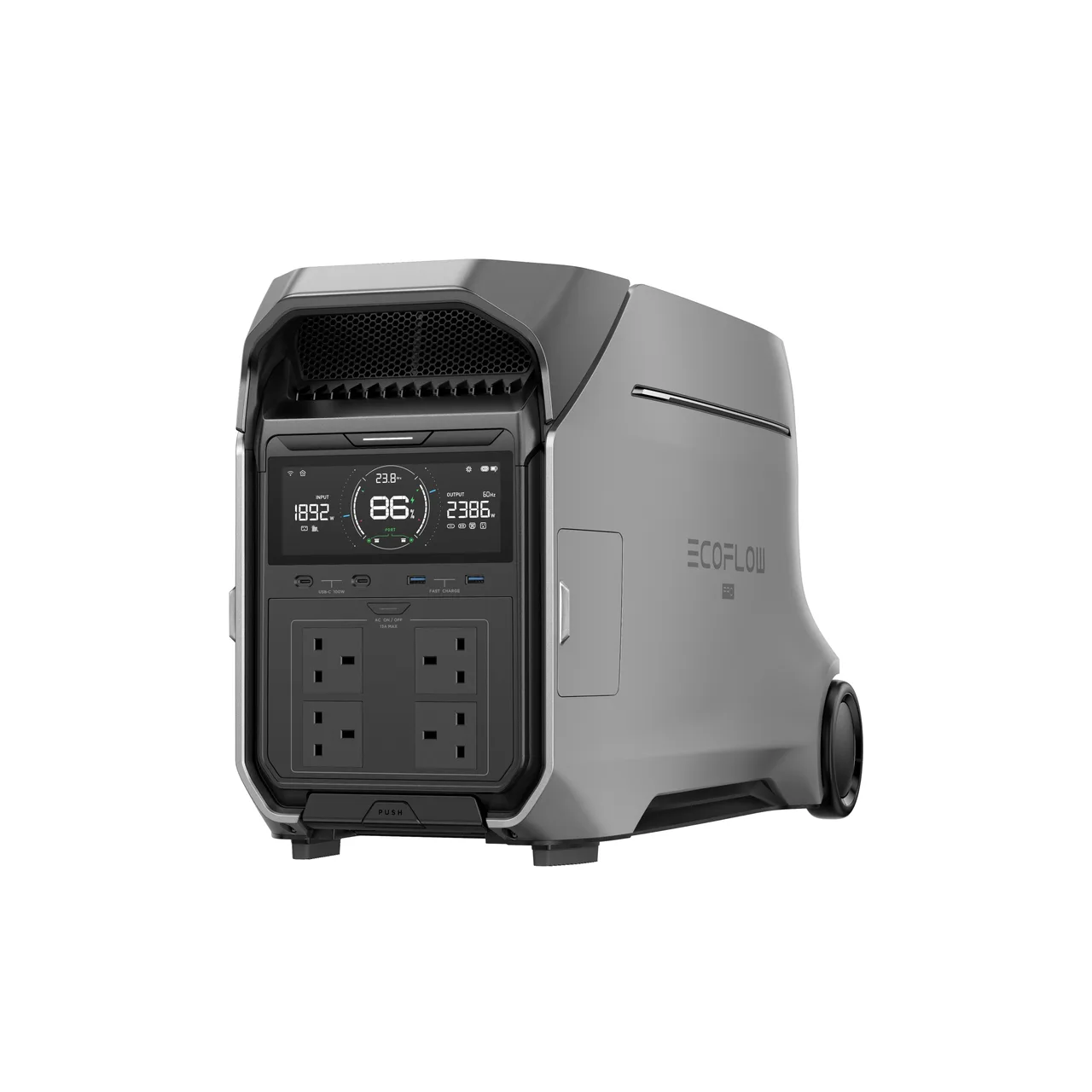
EcoFlow DELTA Pro 3
A 4,096Wh / 4,000W powerhouse that expands toward whole-home backup and supports 240V via a double unit, and serious power-cut insurance.