Are Balcony Solar Panels Worth It in the UK?
By Rob Hammond · Updated September 2026 · How we score
PowerGuide is reader-supported. We may earn a commission from links on this page. It never affects our rankings or what we recommend. Learn more
Now that plug-in solar is legal in Great Britain, the real question is whether it’s worth the money. Short answer: sometimes, and far less often than the “pays for itself in three years” headlines suggest. On our own arithmetic, a register-listed kit at a realistic 50% self-consumption takes between 6.5 and 23 years to pay back across our whole catalogue of 21 kits, and 7.5 to 23.1 years for the three we work through below. It gets much better if you use everything you generate, and much worse if you don’t. Here is the whole calculation, with every input stated.
The maths on an 800W kit
A legal plug-in system generates roughly 380–680 kWh a year per 800Wp of panel in the UK. That spread is position, not luck: our savings calculator uses PVGIS-derived yields of 0.85 kWh per Wp for a south-facing panel tilted about 30° and unshaded, 0.68 for south-east, south-west or a south-facing vertical railing mount, and 0.48 for east/west vertical or partial shade. Those presets already carry the balcony penalty: a vertical rail mount gives around 70% of an optimally pitched array, which is why even the best preset sits below the ~0.95–1.05 kWh/Wp PVGIS reports for optimal south-facing arrays in southern England.
What that generation is worth depends entirely on where it goes:
- Used at home at the October 2026 cap rate of 26.32p/kWh: each kWh saves you 26.32p.
- Exported with no export tariff: worth nothing.
So the single biggest factor is your self-consumption: running the dishwasher, the washing machine, the fridge and your working-from-home load during daylight, when the panel is actually producing.
Nine worked paybacks, at three positions and three prices
Three kits from our register-listed comparison: the cheapest, the median by price, and the dearest. With 21 kits in the catalogue the median is the 11th by price, the UKSOL Pro Compact 460W Ground Mount at £670.80, which happens to be the least flattering of the three, because it costs half again as much as the cheapest kit for 15Wp more panel.
Every input, stated: inverter output 800W (the legal ceiling), no battery (the rules exclude one), import 26.32p/kWh (Ofgem cap, 1 Oct–31 Dec 2026), export 0p/kWh (no export tariff), self-consumption 50%, and the yield presets above. Hardware only: no mounting extras, no consumer-unit work, no replacement inverter. The three prices are indicative catalogue estimates, not quotes, so read them as the scale of the purchase.
| Kit (panel) | Price | South, tilted (0.85) | SE/SW or south vertical (0.68) | East/west or shaded (0.48) |
|---|---|---|---|---|
| PatioSun Lite (445Wp) | £449 | £49.78/yr, 9.0 years | £39.82/yr, 11.3 years | £28.11/yr, 16.0 years |
| UKSOL Pro Compact 460W (460Wp) | £670.80 | £51.46/yr, 13.0 years | £41.16/yr, 16.3 years | £29.06/yr, 23.1 years |
| UKSOL Pro Max 1260W (1,260Wp) | £989 | £132.42/yr, 7.5 years | £105.93/yr, 9.3 years | £74.78/yr, 13.2 years |
Read the columns, not the rows. Moving one kit from a south-facing tilt to an east-west wall adds six to ten years to its payback (7.0 years on the PatioSun Lite, 10.0 on the UKSOL Pro Compact, 5.8 on the Pro Max). Price moves it far less: at any one preset, the gap between the cheapest and dearest kit in the table is only 1.6 to 2.7 years, and it is the dearest that is faster. The biggest kit wins every column despite costing the most, because panel watts are cheap and the fixed costs of a kit (inverter, cable, plug, mounting) are not: the 1,260Wp system costs 2.2× the 445Wp one and, after clipping, delivers about 2.7× the usable generation.
Nor are these the extremes of the market. Across all 21 register-listed kits at the same inputs, the fastest payback is 6.5 years, the 920Wp PowerXpress Plug-in Solar 920W at £669, south-facing and tilted, saving £102.14 a year, and 23.1 years, the median kit on an east/west wall, is the slowest. The three kits below are the cheapest, the median and the dearest, not the best and worst buys.
The reason those numbers are so much worse than the usual claims is the 50% self-consumption assumption. At 100%, with every kWh used the moment it lands, the same three tabulated kits pay back in 3.7 to 11.5 years. Nobody achieves 100%.
Inverter output is fixed at 800W and panels can total up to 2,000W, the UK plug-in limits. Surplus above 800W is clipped.
Price cap average; enter a postcode for your region's rate.
Little clipping at this panel size, so the saving depends mostly on how much you use during daylight.
Estimate only: real output depends on your exact balcony, shading and usage pattern.
What the 800W inverter throws away
The 800W limit is on AC output, not on panel. You may legally put up to 2,000Wp of panel behind an 800W plug-in microinverter (see the rules in full), and on bright days the inverter simply caps what it passes through. The surplus is lost, because the plug-in rules exclude the battery that would otherwise catch it.
Our clipping curve is calibrated against German Balkonkraftwerk simulations: the code comment in
balcony.ts records that a 2,000Wp array on an 800W inverter (a ratio of 2.5) loses about 19% in
those simulations, and our piecewise curve returns 20%. At the “average” 0.68 kWh/Wp preset:
| Panel behind an 800W inverter | Panel:inverter ratio | Clipped | Lost | Usable generation |
|---|---|---|---|---|
| 800Wp | 1.00 | 0% | 0 kWh | 544 kWh |
| 1,200Wp | 1.50 | 5% | 41 kWh | 775 kWh |
| 1,600Wp | 2.00 | 12% | 131 kWh | 957 kWh |
| 2,000Wp | 2.50 | 20% | 272 kWh | 1,088 kWh |
At 50% self-consumption and 26.32p/kWh, each of those clipped kWh is worth 13.16p on average, so the 2,000Wp array is throwing away about £36 a year of value it paid for. It is still the best system in the table, at 1,088 usable kWh against 544. It is just the least efficient use of the last panel you bought. Oversizing beyond roughly 1.5× is a decision to buy generation for the dark half of the year at the cost of wasting it in June.
Self-consumption changes the answer more than anything else
The median kit again (UKSOL Pro Compact 460W, £670.80, “average” 0.68 preset, 800W inverter, no battery, 26.32p import, 0p export), with only the self-consumption assumption moved:
| Self-consumption | Used at home | Exported (worth £0) | Annual saving | Payback |
|---|---|---|---|---|
| 30% (out all day) | 94 kWh | 219 kWh | £24.70 | 27.2 years |
| 50% (our default) | 156 kWh | 156 kWh | £41.16 | 16.3 years |
| 70% (home most days) | 219 kWh | 94 kWh | £57.63 | 11.6 years |
That is a 15-year swing from one behavioural assumption on an identical piece of hardware. If you get an export tariff, the exported column stops being worthless and the gap narrows, so put your own export rate into the calculator above. Without one, the honest advice is that timeshifting your laundry is worth more than buying a better panel.
Why a battery isn’t an option (yet)
In Germany, many balcony systems add a battery to shift generation to the evening, which would turn a 30% self-consumption household into a 70% one and halve the paybacks above. The UK’s plug-in rules exclude energy storage, so a self-installed kit must be battery-free. DESNZ is studying plug-in battery safety from October 2026; until the rules change, a battery needs a hardwired installation by an electrician, which rarely makes sense for an 800W system. Our balcony battery guide tracks where that stands.
Who balcony solar suits best
- Renters and flat-dwellers who can’t get a roof install and need something they can unplug and take with them. See balcony solar for renters and flats.
- Homes with high daytime usage: working from home, a daytime appliance routine, anything that keeps the 50% column honest.
- Anyone with a south-facing balcony, patio or garden with little shading, who can tilt the panel rather than hang it flat against a railing.
When the answer is no
- A north-facing balcony. Our calculator has no preset for it. The worst preset, 0.48 kWh/Wp, is east/west vertical or partial shade; a true north aspect is worse than that and we haven’t modelled it, so we’re not going to publish a number for it. Take the 23-year figure in the east/west column as a floor, not an estimate.
- Out of the house all day, on a flat tariff. The 30% row above, 27 years on the median kit, is longer than any warranty on the market. Fix the usage pattern first, or don’t buy.
- No outdoor socket on an ordinary circuit. A plug-in kit must go straight into a wall socket: no extension leads, no multi-way adaptors, and not a socket shared with a cooker or other heavy load. See “setting up safely”. Having a socket installed by an electrician is a real cost that none of the paybacks above include.
- A kit that isn’t listed Compliant on the ENA register. Then it isn’t a question of payback: you can’t legally plug it in yourself in Great Britain. Every kit in our comparison carries its register status and reference.
What could make these numbers wrong
Each of these cuts in a known direction, and we’d rather say so than round it away:
- Kit prices are indicative catalogue estimates. If you pay less than we list, every payback shortens proportionally; retail plug-in solar is discounted heavily.
- Electricity prices move. Every payback above holds 26.32p/kWh flat for 20 years. The cap resets quarterly, and electricity is VAT-free only until 31 March 2027, after which the same cap rate carries 5% VAT. Rising prices shorten payback; that is the one uncertainty pointing the optimistic way.
- The yield presets are model output, not measurement. They are PVGIS-derived and sanity- checked, but your balcony’s shading is specific to your balcony and we have not seen it.
- Nothing here includes a failure. No replacement microinverter, no mounting hardware beyond what’s in the box, no degradation. All three push the real payback out.
- Self-consumption is a guess about you. It is the input that matters most and the one we can least verify, which is why the table above shows it three ways rather than picking one.
Run your own numbers with the balcony solar savings calculator, compare kits and their register status on our plug-in kits page, or start from the balcony solar hub.
All prices, rates and figures were checked on 2026-09-21. The price cap is reset quarterly, so re-check before committing.
What’s changed (changelog)
- 21 September 2026. Added nine worked paybacks (three register-listed kits × three orientation presets), the clipping table at 800/1,200/1,600/2,000Wp, a self-consumption sensitivity table, a “when the answer is no” section and the caveats. Replaced the earlier “3 to 10 years” payback claim, which assumed self-consumption we can’t justify.
- 15 September 2026. Rewritten for the rules in force since 27 August 2026, and for the October 2026 price cap.
- 16 June 2026. First published.
FAQs
How much can a balcony solar kit save per year?
An 800Wp kit generates roughly 380–680 kWh a year in the UK depending on position: a south-facing tilted panel at the top, an east/west vertical one at the bottom (PVGIS-derived yields, see the calculator). Used at home at the 26.32p/kWh October 2026 cap rate that is about £100–180 a year if you use all of it; anything exported without an export tariff is worth nothing.
How long until a balcony kit pays for itself?
Longer than the marketing suggests. Run all 21 register-listed kits in our catalogue (£449–£989) at a realistic 50% self-consumption, no export payment and the 26.32p/kWh October 2026 cap rate, and payback runs from 6.5 years for the 920Wp PowerXpress kit on a south-facing tilt to 23.1 years for the mid-priced 460Wp UKSOL Pro Compact on an east/west wall. Of the three kits we work through in full below, the range is 7.5 to 23.1 years. Position and daytime usage decide it, not brand.
Does a bigger panel array behind the 800W inverter pay?
Usually yes, but with diminishing returns. On our clipping model, calibrated to German Balkonkraftwerk simulations, 1,200Wp of panel on an 800W inverter loses about 5% of annual generation to the inverter ceiling, 1,600Wp loses 12% and the legal maximum 2,000Wp loses 20%. You still end up with more usable kWh each time; you just pay for panel you only partly use.
When is balcony solar not worth it?
A north-facing balcony (worse than our 'poor' preset, which is east/west or partly shaded, and which we don't model), a household out all day so self-consumption sits near 30%, no outdoor socket on a normal circuit (extension leads aren't allowed), or a kit that isn't listed Compliant on the ENA Type Test Register, in which case you can't legally self-install it at all.
Sources
- Ofgem: energy price cap unit rates, 1 Oct–31 Dec 2026 · checked 21 Sept 2026
- EC JRC: PVGIS (the yields in our balcony model are sanity-checked against it) · checked 21 Sept 2026
- ENA: Type Test Register · checked 21 Sept 2026
- ENA: myplugin.solar registration portal · checked 21 Sept 2026
Related products
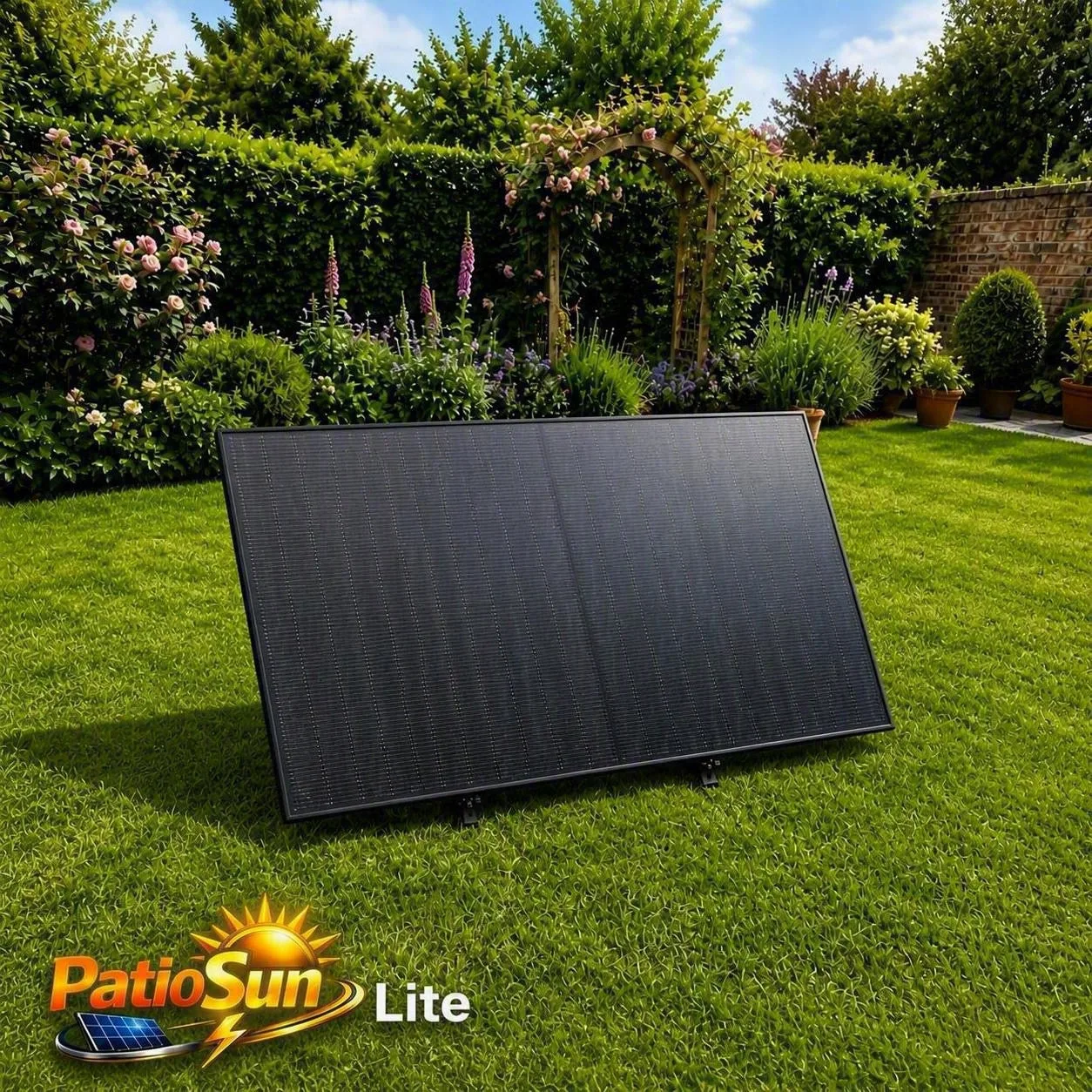
PatioSun Lite
PatioSun's entry kit: one bifacial panel on a pre-installed powder-coated steel ground mount, run by a Hoymiles HiFlow microinverter.
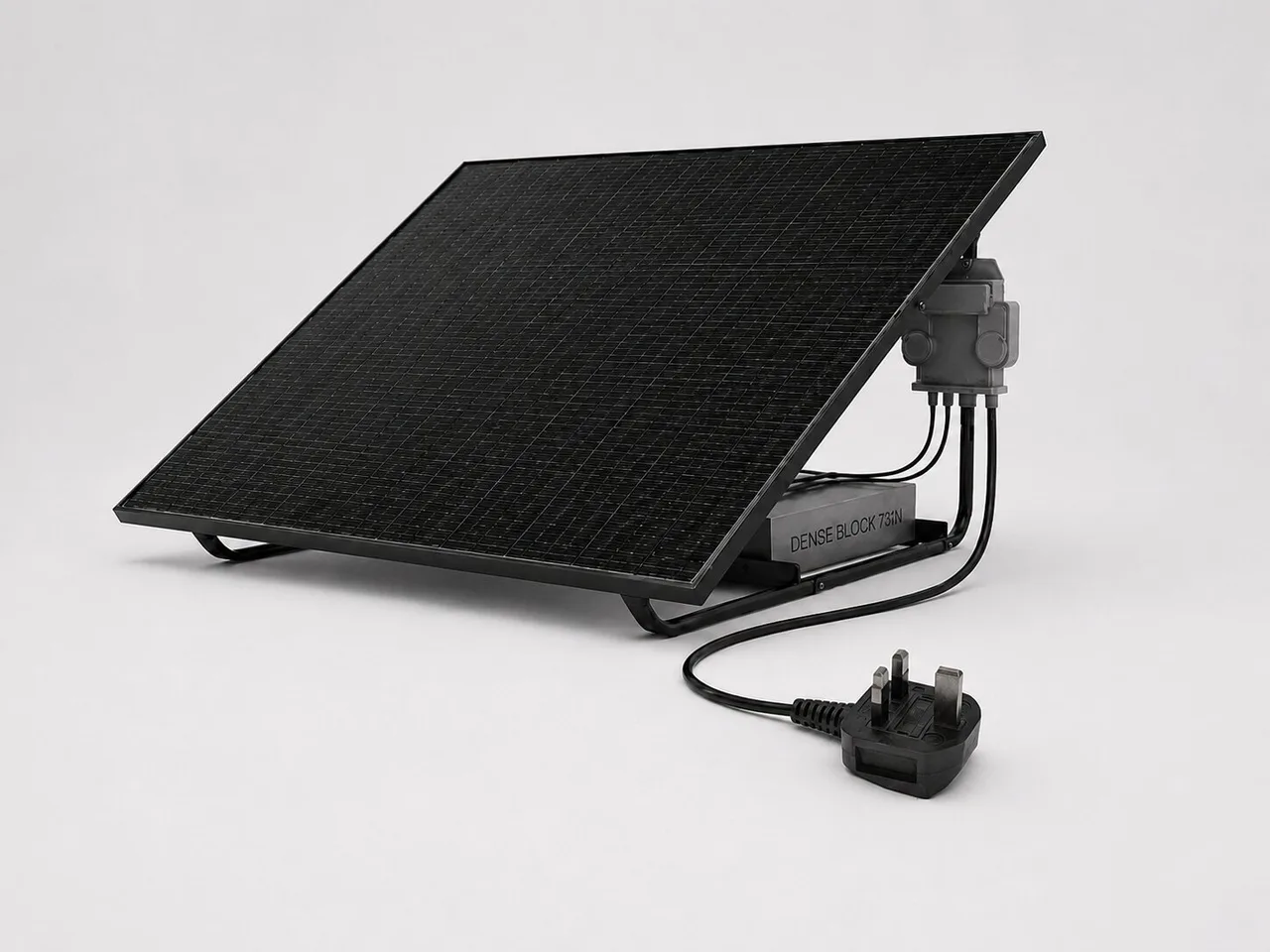
UKSOL Pro Compact 460W Ground Mount
UKSOL's ground-mount single-panel kit: one 460W panel on UKSOL's own ground mount, paired with an 800W microinverter.
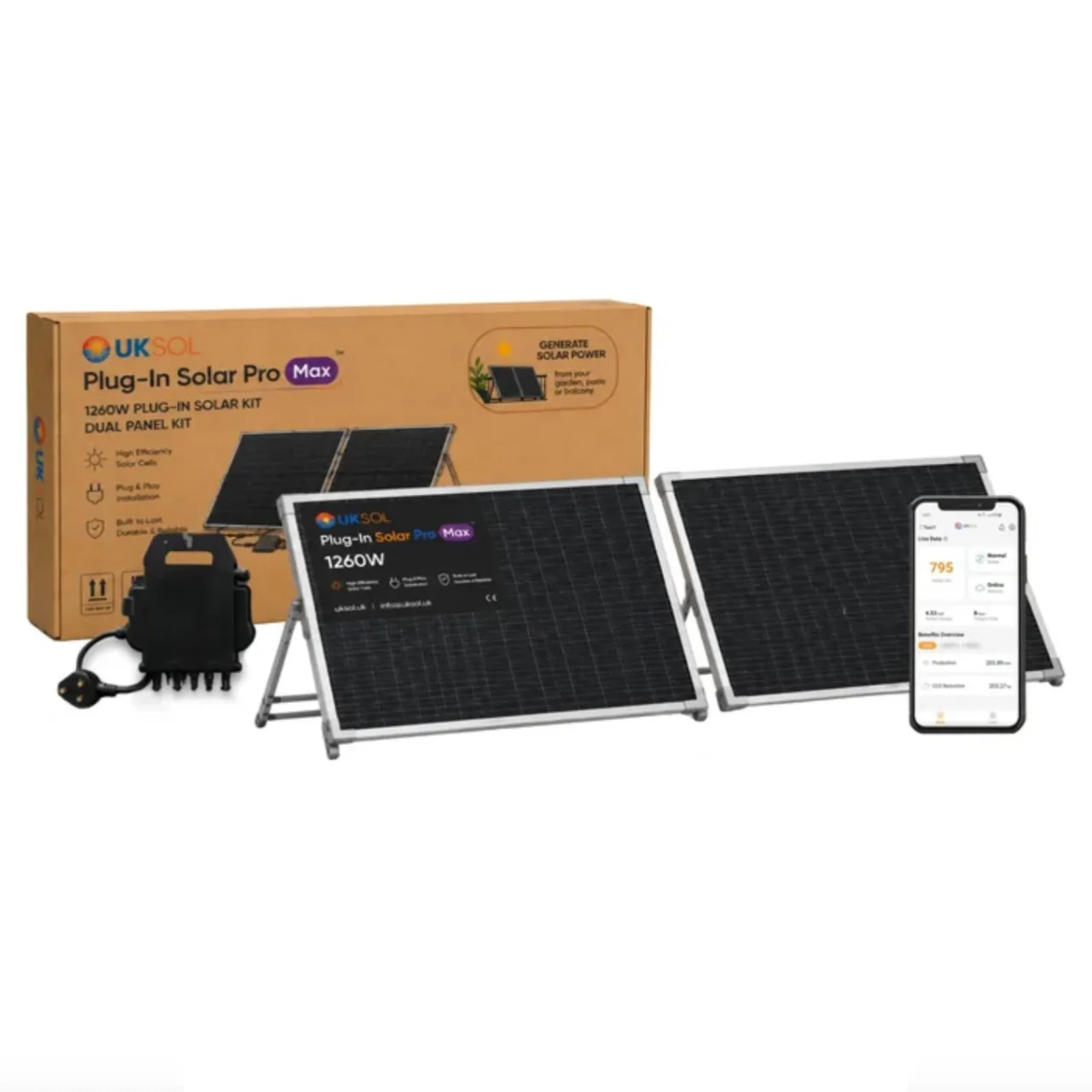
UKSOL Pro Max 1260W Hybrid Mount
Two 630W bifacial panels for 1260W of capacity, the largest panel array in UKSOL's Hybrid range, on the same adjustable mount and APSystems EZ1-M 800W microinverter.
Related guides
- Balcony Solar Batteries: Where the UK Rules Stand (2026)
Plug-in batteries can't be self-installed in Great Britain yet. Why the rules exclude them, what DESNZ is studying, and how balcony storage would work when they're allowed.
- Are Plug-in & Balcony Solar Panels Legal in the UK? (2026)
Plug-in solar became legal in Great Britain on 27 August 2026. The 800W rule, the ENA register, why batteries don't qualify yet, and how to register your kit.
- Balcony Solar for Renters, Flats & Leaseholders (UK 2026)
You don't need to own a roof to own solar. What renters and flat-owners can install without permission, what needs consent, and how to take it with you when you move.