Balcony Solar Batteries: Store What You Make (UK 2026)
By Rob Hammond · Updated July 2026 · How we score
Germany installed 3 million balcony solar systems and then discovered something: the panels produce far more than the 800W feed-in limit lets you use. The result is a booming plug-in storage market — modular batteries competing on capacity and smart features, like the early Powerwall days but for flats. The UK’s rules are nearly identical to Germany’s, so the same logic applies here from day one.
The 800W limit is on output — not panels
UK rules cap what a plug-in inverter feeds into your home at 800W. They don’t cap the panels behind it. Systems like the EcoFlow STREAM Ultra take 2,000W+ of panels; the Anker Solarbank 4 takes up to 5,000W. Why oversize? Because a UK panel rarely produces its rated power — on dull days a 2,000Wp array might make 300W, all usable. The trade-off appears on sunny days, when the array makes more than 800W and the inverter must clip the excess — generation that simply evaporates.
At 1,600Wp on an 800W inverter, clipping costs roughly a tenth of annual generation; at 2,400Wp, closer to a quarter. The savings calculator models this for your exact setup.
What a battery changes
A balcony battery does two jobs:
- Catches clipped surplus. Midday excess charges the battery instead of vanishing.
- Shifts generation to the evening. Solar peaks at noon; kettles peak at 7pm. Storage moves your self-consumption from ~50% to 80–90%, and every stored kWh replaces a ~28p imported one.
Together these can roughly double the annual value of an oversized array — which is why the German market tipped so hard toward storage.
AC-coupled vs PV-coupled
- PV-coupled (Anker Solarbank 4 E5000 Pro, Zendure SolarFlow 800 Pro): panels plug into the battery, the battery feeds the inverter. Captures surplus before the 800W bottleneck. Right choice if you’re running big panel arrays.
- AC-coupled (Marstek Venus E, EcoFlow STREAM AC Pro): charges from a normal socket. Less efficient at catching solar surplus, but it can charge from cheap off-peak tariffs — useful even with no panels at all. On Octopus-style tariffs the arbitrage alone can justify the unit.
When storage pays — and when it doesn’t
Skip the battery if your panels are 800Wp or under (nothing to clip, and daytime use may already soak up generation) or if someone’s home all day. Buy it if your array exceeds ~1,200Wp, if the flat is empty on weekdays, or if you’re on a time-of-use tariff. Compare current units in the balcony batteries category — we track usable capacity, PV input, cycle life and price per stored kWh.
FAQs
Why would balcony solar need a battery?
Two reasons: the UK's 800W limit applies to output, not panel size — so oversized arrays generate power the inverter must throw away unless a battery absorbs it. And most generation happens midday while most use is in the evening; a battery bridges the gap.
What's the difference between AC-coupled and PV-coupled balcony batteries?
PV-coupled units sit between the panels and the inverter, catching surplus before it's clipped. AC-coupled units charge from a socket — which also lets them charge from cheap off-peak tariffs, with or without panels.
Is a balcony battery worth it without solar panels?
It can be, on a time-of-use tariff: charge at the cheap overnight rate, run the home from the battery at peak times. Units like the Marstek Venus E are designed for exactly this.
Related products
Anker SOLIX Solarbank 4 E5000 Pro
Anker's flagship plug-in balcony battery: 5kWh usable, a huge 5,000W of PV input across four MPPTs and an 800W grid-tied output — expandable to 30kWh with add-on packs.
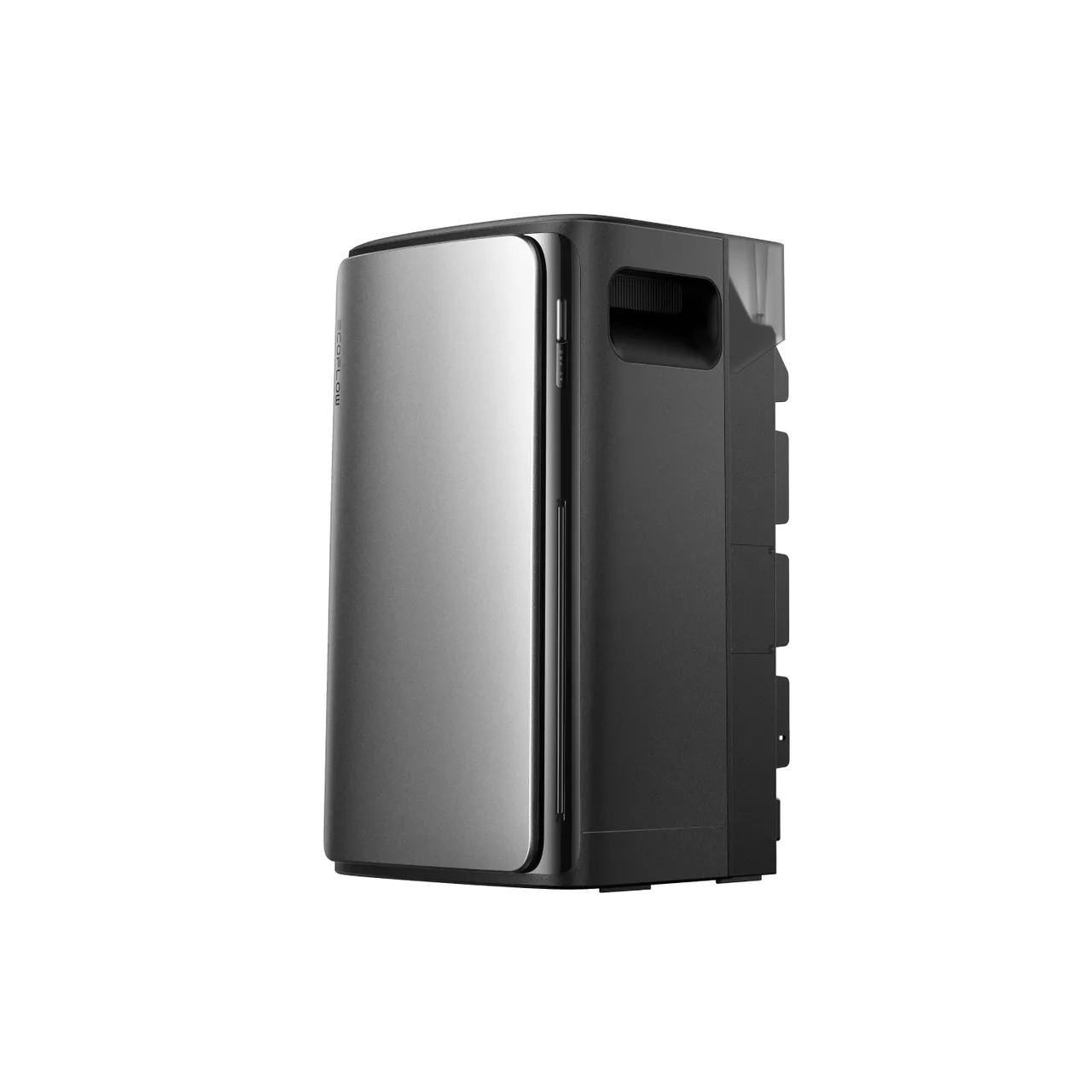
EcoFlow STREAM AC Pro
A 1.92kWh add-on battery for the STREAM ecosystem that also works standalone as an AC-coupled plug-in battery for off-peak charging.
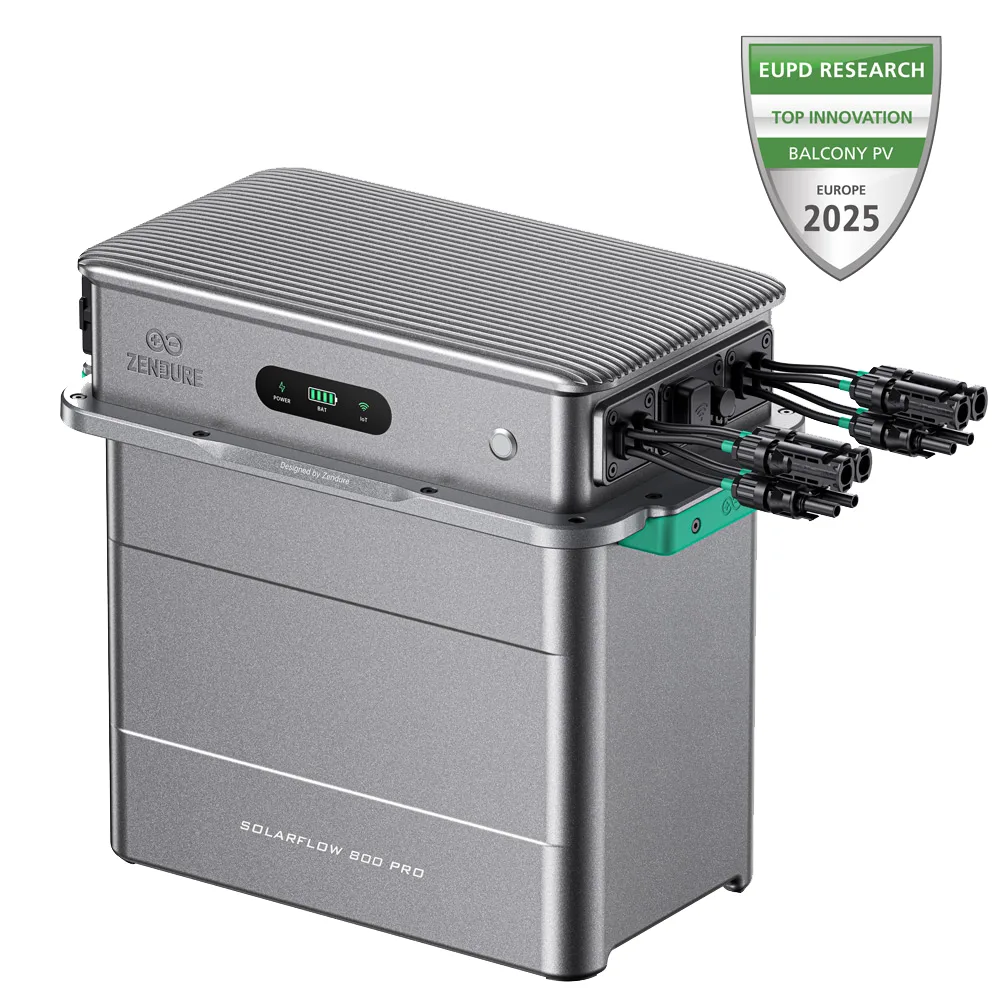
Zendure SolarFlow 800 Pro
Zendure's all-in-one balcony battery: 1.92kWh usable with an 800W hybrid microinverter and 2,640W of DC-coupled PV input, stackable to 11.5kWh.
Marstek Venus E
A plug-in balcony battery with a built-in 800W microinverter. AC-coupled — it charges from cheap off-peak electricity rather than panels, then powers your home at peak times.