Ground Source Heat Pump Cost (UK 2026)
By Rob Hammond · Updated September 2026 · How we score
PowerGuide is reader-supported. We may earn a commission from links on this page. It never affects our rankings or what we recommend. Learn more
The honest headline: the best UK statistic we can find puts the average MCS-certified ground source heat pump installation at around £21,000 between 2023 and 2024, and the £7,500 Boiler Upgrade Scheme grant comes off that, leaving roughly £13,500. It runs measurably cheaper than an air source heat pump, about £109 a year on the worked example below, which on those capital figures is not a payback story. Ground source earns its money on space, silence, longevity and very high heat loads, not on the fuel bill.
What a ground source install actually costs
There is one number here worth trusting, and it is weaker than the equivalent air source number.
Nesta’s data-driven heat pump FAQs, published 21 January 2025, report that “between 2023 and 2024, the average cost of an MCS-certified GSHP installation was around £21,000, though this can vary depending on the system type”. The page says the installations were MCS-certified; it does not name the dataset behind the figure, so neither will we. Three caveats come with it: it is an average, not a median, so a handful of expensive schemes pull it up; it is a rounded figure; and it covers 2023–24, so it is older than the air source figure we quote elsewhere on this site.
What does not exist. Nesta’s four-years-of-the-Boiler-Upgrade-Scheme analysis, which is where our £13,041 median air source install cost comes from, publishes no ground source figure at all: the word does not appear in it. And Ofgem’s monthly scheme update, covering 23 May 2022 to 31 August 2026, reports 101,029 vouchers issued and 93,364 redeemed worth £661,303,000 in grants paid, but gives no technology breakdown, so you cannot pull a ground source voucher count or value out of it. We are not going to invent a median that nobody publishes.
What manufacturers publish. Kensa, the UK’s largest ground source manufacturer, does not publish an installed price range either. Its cost page says only that “installation costs vary widely” and, on the borehole page, “ask Kensa for cost guidance tailored to your site”. What it does publish is unit prices, which are a useful floor:
| Kensa unit (manufacturer price) | Output | Published from-price |
|---|---|---|
| Shoebox | 3kW | £4,625 |
| Shoebox | 6kW | £6,200 |
| Evo | 7kW | £7,660 |
| Evo | 9kW | £8,320 |
| Evo | 13kW | £9,065 |
| Evo | 17kW | £10,685 |
| Evo (three-phase) | 15kW | £9,725 |
Those are manufacturer list prices for the box only. The ground array, the cylinder, the emitters and the labour are all extra, and Kensa’s own technical director writes that “the ground arrays for a ground source heat pump installation are usually the most expensive element to install”. The gap between £6,200 and £21,000 is, overwhelmingly, the hole in the ground.
For comparison, the fully-installed prices we hold in our catalogue. These are indicative catalogue estimates, not sourced figures. Unlike the £21,000 average above, they do not come from published data:
| System | Output | SCOP (datasheet) | Indicative installed price |
|---|---|---|---|
| Kensa Shoebox NG | 6kW | 4.3 | £20,000 |
| NIBE S1255 | 6kW | 4.7 | £22,000 |
Borehole or trench, and why it matters to the price
The heat pump is a box in a cupboard. The decision that moves the money is how you get the heat out of the ground.
Trenches (slinkies or straight pipe). Nesta describes this as “underground pipework laid in a trench about 1–1.5m deep and 100–200m long, requiring roughly 600 square metres of mostly clear land”. Kensa’s cost page calls trenched arrays “the lowest cost option”: it is a digger and a day or two, not a drilling rig. The catch is the 600m², and that your garden is a building site while it happens.
Boreholes. Nesta: “one or more boreholes about 20cm wide and 75–200m deep”. Kensa says its boreholes are “typically drilled to a depth of between about 80 and 300 metres”, need only 150mm of lateral space at ground level, and that an 80-to-100 metre borehole provides 3 to 5 kilowatts of extractable heat, often enough for one house. They cost more, in Kensa’s words, “because they require specialist drilling”. They also depend on geology: Kensa notes that “a borehole in granite extracts twice or three times as much heat as one in loose stones”, which is why a thermal conductivity test exists.
Neither normally needs planning permission, because ground source heat pumps are generally permitted development, but Kensa flags that a borehole may need a permit from the Environment Agency and/or the Mining Remediation Authority in a reporting area. Check before you book a rig.
Shared ground loops. This is the route that makes ground source viable for a terrace or a block of flats: one array serves many homes, each with its own small heat pump indoors. It is Kensa’s whole business model, and it matters financially for two reasons. First, the array cost is spread across the homes on it. Second, GOV.UK’s grant explicitly covers it: the Boiler Upgrade Scheme pays “£7,500 towards a ground source heat pump (including water source heat pumps and those on shared ground loops)”. The scheme’s capacity cap for shared ground loops is 300kWth, against 45kWth for an individual system.
The grant, the VAT and the net cost
GOV.UK sets the ground source grant at £7,500 in England and Wales, with an extra £1,500, or £9,000 in total, “until March 2027” for a property heated by oil or LPG with no mains gas connection. Our Boiler Upgrade Scheme guide covers the eligibility wording and the 120-day commissioning rule in full; you never handle the money, your MCS-certified installer claims it and takes it off the invoice.
Against Nesta’s £21,000 average:
- On gas, replacing a gas boiler: about £13,500
- Off-gas, replacing oil or LPG, before March 2027: about £12,000
Both are approximate by construction, a cash grant taken off a rounded average, so treat them as “somewhere around thirteen and a half thousand”, not a quote.
There is no VAT on top. HMRC’s VAT Notice 708/6 zero-rates ground source heat pumps from 1 May 2023 to 31 March 2027, and, unusually useful here, since 1 February 2024 the relief “also includes preparatory work that is necessary for the installation of a ground source heat pump”, meaning the groundworks and dredging. Given that the array is the expensive half of the job, that extension is worth more on a ground source install than on an air source one. From 1 April 2027 both revert to the 5% reduced rate.
In Scotland, BUS does not apply; Home Energy Scotland offers up to a £7,500 grant plus up to a £7,500 interest-free loan, with a £1,500 rural uplift.
What it costs to run
The efficiency figure to use, and the one not to. The DESNZ-funded Electrification of Heat project did monitor ground source heat pumps, and it reports a median SPFH4 of 2.85 (IQR 2.62 to 3.33), but from only 23 analysed properties, 16 of them on shared ground loops. The report is blunt about this: “it is therefore not recommended that these results be used as a reference for mean or median GSHP SPF.” We are quoting it because a report that tells you not to use its own number deserves repeating, not hiding.
The report points instead to the RB&M analysis of Ofgem data for DESNZ, September 2024, which covers 286 ground source installs from 2017 to 2022 and finds a median in-situ SPF of 3.26 (IQR 2.83 to 3.64), against 2.69 (IQR 2.26 to 3.07) across 1,431 air source installs. The 2022 cohort alone did better still: 3.34. That is the figure to plan on.
Note the gap to the forecast. The same table gives a median consumer forecast efficiency (SCOP) of 3.93 for those ground source systems, which is the design figure the installer quoted the customer before the job, so real installs came in around 0.67 below what they were sold as. The SCOPs of 4.3 and 4.7 on our catalogue entries are laboratory figures and should be read the same way.
The arithmetic. Ofgem’s cap for 1 October to 31 December 2026 sets 26.32p/kWh for electricity (54.83p/day) and 7.97p/kWh for gas (29.68p/day); Ofgem’s medium typical gas consumption is 9,500kWh a year; and the best in-situ UK boiler measurement remains 82.5%. That gives a gas bill of £865 a year delivering 7,838kWh of heat. Every row below divides that heat by the SPF and prices the electricity:
| System and SPF | Electricity used | Saving vs gas | From 1 April 2027 |
|---|---|---|---|
| GSHP, lab SCOP 4.7 (NIBE S1255) | 1,668kWh | £427 | £405 |
| GSHP, lab SCOP 4.3 (Kensa Shoebox NG) | 1,823kWh | £386 | £362 |
| GSHP, measured median 3.26 (RB&M, n=286) | 2,404kWh | £233 | £201 |
| GSHP, EoH SPFH4 2.85 (n=23, not recommended) | 2,750kWh | £142 | £105 |
| ASHP, measured median SPFH4 2.78 (EoH, n=428) | 2,819kWh | £123 | £86 |
The last column is what happens when the temporary zero rate on domestic electricity ends on 31 March 2027 and 26.32p becomes 27.64p, while the gas rate, which already includes its 5%, does not move.
If you keep a gas hob, you go on paying the £108-a-year gas standing charge, and every saving drops by that much: the measured-median ground source saving falls from £233 to £124, and to £93 from April 2027. Ground source survives that test comfortably where air source barely does: on the same assumptions a median air source install keeping its gas hob saves £15 now and loses £22 from April 2027.
Put your own consumption in. The calculator starts on the Kensa catalogue SCOP of 4.3, which is the optimistic end; set the SPF slider to 3.25, whose steps are 0.05, so 3.26 is not selectable, to see the measured case. The 4.7 row in the table above is beyond the slider’s 4.5 ceiling.
Measured in real UK homes: bottom quartile 2.55, median 2.78, top quartile 3.05. A datasheet SCOP of 4+ is a laboratory figure.
Break-even SPF at these prices: 2.38. A heat-pump tariff (e.g. Cosy Octopus) lowers the effective electricity price and moves this in the heat pump's favour.
Enter a postcode for your region's electricity rates. Cosy Octopus rates for your region.
Now the uncomfortable comparison. Measured median against measured median, ground source saves £233 a year and air source £123, a difference of about £109. After grants, ground source costs about £13,500 against roughly £5,541 for the median air source install, a gap of about £7,959, though that gap pairs a 2023–24 MCS average with a 2025/26 Boiler Upgrade Scheme median, so it is indicative rather than a like-for-like statistic. At £109 a year, the running-cost advantage takes roughly 73 years to repay the difference. Pair RB&M’s ground source median against RB&M’s own air source median of 2.69 instead, and the gain rises to £134 a year and the horizon shortens to about 59 years; we lead with the 2.78 pairing for consistency with the rest of the site, and either way the conclusion is the same. That is not a rounding error you can argue away with a better tariff, and it is the single most important number on this page. Our heat pump cost guide works the air source side of that comparison in full.
When ground source is the right answer
Given the above, ground source has to win on something other than payback. It often does:
- You have the land, and a trench array is realistic. 600m² of clear garden turns the expensive half of the job into a digger hire. This is the case where the price gap narrows most.
- There is nowhere to put an outdoor unit, or noise is the constraint. Nothing stands outside. Both units in our catalogue are rated at 42–43dB and live indoors, which matters for a conservation area, a tight terrace boundary, or a bedroom wall.
- Your heat load is genuinely high and you are not going to fix it. A large, hard-to-insulate house is where a 3.26 SPF against a 2.69 is worth real money, because the kWh being multiplied are many. The EoH data also found ground source COP “remained above 3.0 even down to external temperatures of −5°C”, where air source performance falls away.
- You are staying, and you are building anyway. Kensa puts unit life at about 25 years against 10–15 for air source, and ground arrays at 100 years or more, though these are manufacturer figures, not independent ones, so weight them accordingly. If the floors are already up for underfloor heating, the marginal cost of doing it now is far below the retrofit cost later.
- A shared ground loop exists or is being built on your street or in your block. That changes the capital arithmetic completely, and the £7,500 grant still applies.
When the answer is no
- Small garden, no borehole budget. If a trench array will not fit and drilling is out of reach, the honest answer is an air source heat pump, and the air source page will serve you better than a quote you cannot afford.
- A moderate heat load an air source unit handles. At a normal three-bed’s demand, you are paying roughly £8,000 more after grants to save about £109 a year. Spend the difference on insulation and emitters, which improve whichever heat pump you fit.
- You are moving within a few years. None of the ground source case, longevity, array life or stable winter performance, pays out on that timescale, and there is no evidence a buyer prices a borehole into an offer.
- You want certainty about the price before you start. Nobody publishes a ground source installed-price range, including the manufacturers. You will be relying on site-specific quotes in a way you would not be with air source.
Kensa’s own marketing claims savings of “up to £1,000 per year compared to air source heat pumps” for a five-bedroom home and “as much as £30,000” over 30 years. Those are unsourced manufacturer figures with no stated assumptions, they are several times the difference our worked example produces on Ofgem’s own rates, and we are not adopting them.
Before you collect quotes, run our suitability checker, compare the units on the ground source heat pumps page, and put your own numbers through the heat pump running cost calculator. The heat pumps hub has the rest.
All prices, grant levels and tariff rates were checked on 21 September 2026. The price cap is reset quarterly and grant levels change, so re-check before committing.
What’s changed (changelog)
- 21 September 2026 (revised same day). Tightened provenance and the SPF pairing: the Nesta page names only “MCS-certified” installations, not a dataset, so the claim that the £21,000 came from the MCS database has been removed; the £109-a-year figure is now correctly attributed to RB&M’s ground source median of 3.26 against the Electrification of Heat air source median of 2.78, with RB&M’s own air source median of 2.69 given as the alternative pairing (£134 a year, about 59 years); noted that the £7,959 capital gap pairs an MCS average with a BUS median; corrected the RB&M column name to the consumer forecast SCOP; corrected “16 on a single shared loop” to 16 on shared ground loops; added the Evo 15kW three-phase price and the Kensa ground array article to the sources; and pointed the calculator instruction at 3.25, the nearest step on its slider.
- 21 September 2026. First published. Built on Nesta’s £21,000 average MCS-certified ground source install cost (2023–24), the RB&M median in-situ SPF of 3.26 across 286 ground source installs, Kensa’s published unit prices and borehole guidance, the GOV.UK £7,500 grant including shared ground loops, and HMRC’s zero rate covering preparatory groundworks. Records that neither Nesta’s Boiler Upgrade Scheme analysis nor Ofgem’s monthly scheme update publishes a ground source cost or voucher figure.
FAQs
How much does a ground source heat pump cost in the UK?
Nesta's data-driven heat pump FAQs, published 21 January 2025, report that between 2023 and 2024 the average cost of an MCS-certified ground source heat pump installation was around £21,000. That is the only recent UK installation-cost statistic we can find for ground source specifically: Nesta's four-years-of-the-Boiler-Upgrade-Scheme analysis gives a median only for air source (£13,041 in 2025/26), and Ofgem's monthly scheme update does not break vouchers down by technology at all.
What does a ground source heat pump cost after the grant?
The Boiler Upgrade Scheme pays £7,500 towards a ground source heat pump in England and Wales, including water source heat pumps and those on shared ground loops (GOV.UK). Against Nesta's £21,000 average that leaves about £13,500, or about £12,000 for an oil or LPG property with no mains gas connection, which gets a further £1,500 until March 2027. Both subtractions are approximate: they take a cash grant off a rounded average.
Is a borehole or a trench cheaper for a ground source heat pump?
A trench. Kensa's own cost guidance says ground arrays dug in trenches using slinkies or straight pipe are "the lowest cost option" and that boreholes are more expensive because they require specialist drilling. Nesta puts the trench option at roughly 600 square metres of mostly clear land, against a borehole 20cm wide and 75–200m deep that needs only rig access.
Is a ground source heat pump cheaper to run than an air source one?
Yes, on the measured evidence, but not by enough to pay for the difference in capital. The worked example in this guide pairs the RB&M median in-situ SPF of 3.26 across 286 ground source installs with the Electrification of Heat median SPFH4 of 2.78 across 428 air source ones, the figure the rest of this site uses, which is worth about £109 a year, against roughly £8,000 more to install after grants. Pairing RB&M against its own air source median of 2.69 instead widens that to about £134 a year.
Do I pay VAT on a ground source heat pump?
No, not until 31 March 2027. HMRC's VAT Notice 708/6 zero-rates ground source heat pumps from 1 May 2023 to 31 March 2027, and since 1 February 2024 the relief also covers the preparatory groundworks needed to install the pipework. From 1 April 2027 both revert to the 5% reduced rate.
Sources
- Nesta: What homeowners want to know about heat pumps: what are the benefits of ground source heat pumps? · checked 21 Sept 2026
- Nesta: Four years of the Boiler Upgrade Scheme in four charts · checked 21 Sept 2026
- Ofgem: BUS monthly scheme update · checked 21 Sept 2026
- GOV.UK: Boiler Upgrade Scheme: what you can get · checked 21 Sept 2026
- RB&M for DESNZ: In-Situ Heat Pump Performance Analysis of Ofgem Data 2017–2022 (September 2024) · checked 21 Sept 2026
- Energy Systems Catapult: Electrification of Heat: heat pump performance data analysis · checked 21 Sept 2026
- Kensa: Ground source heat pump costs · checked 21 Sept 2026
- Kensa: The unbendable rules of ground arrays (Guy Cashmore, technical director) · checked 21 Sept 2026
- Kensa: Ground source heat pump boreholes · checked 21 Sept 2026
- Kensa: Shoebox ground source heat pump (unit prices) · checked 21 Sept 2026
- Kensa: Evo ground source heat pump (unit prices) · checked 21 Sept 2026
- HMRC: VAT Notice 708/6: energy-saving materials and heating equipment · checked 21 Sept 2026
- Ofgem: energy price cap unit rates, 1 Oct–31 Dec 2026 · checked 21 Sept 2026
- Ofgem: price cap will rise 4% from October 2026 (VAT removal) · checked 21 Sept 2026
- Home Energy Scotland: grants and loans · checked 21 Sept 2026
Related products
Kensa Shoebox NG
A compact British ground-source unit ideal for flats and terraces on shared ground arrays, with very high, stable efficiency and near-silent indoors.
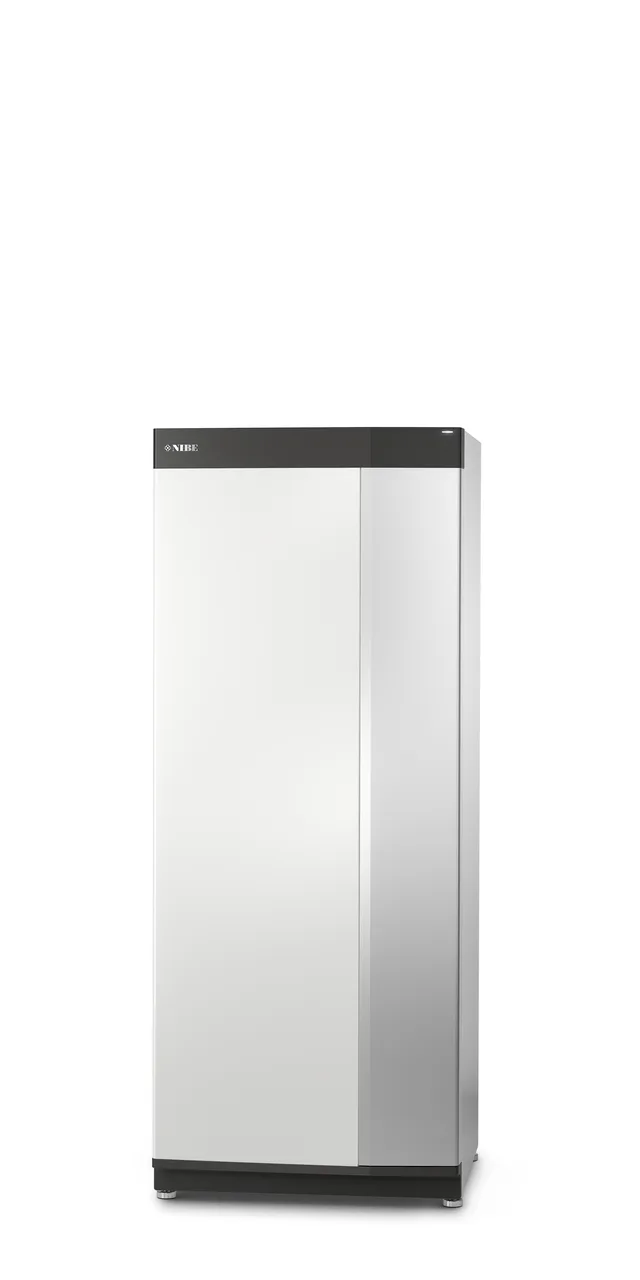
NIBE S1255
A premium Swedish ground-source system with one of the highest SCOPs available and excellent smart controls.
Related guides
- The Boiler Upgrade Scheme Explained (UK 2026)
£7,500 towards a heat pump in England and Wales, £9,000 off-gas until March 2027: who qualifies, how the money reaches you, and what Ofgem's own figures say about uptake.
- Heat Pump vs Gas Boiler: Which Is Cheaper in 2026?
An honest comparison of heat pumps and gas boilers on running cost, upfront price, comfort and carbon, and when each one wins.
- How Much Does a Heat Pump Cost in the UK? (2026)
What a UK air source heat pump actually costs in 2026: the median BUS installation price, what the £7,500 grant leaves you paying, and an honest running-cost comparison against gas at the October 2026 price cap.