How Much Do Solar Panels Cost? (UK, 2026)
By Rob Hammond · Updated September 2026 · How we score
PowerGuide is reader-supported. We may earn a commission from links on this page. It never affects our rankings or what we recommend. Learn more
About £7,238 for a typical 4.4kWp array, fitted, with no VAT to add. That comes from the government’s own statistics rather than an installer’s price list, and it is a mean across tens of thousands of real 2025/26 jobs. The number moves with system size in a way that surprises most people: bigger is cheaper per kW, and a 4.4kW system genuinely costs less in total than a 4kW one. Here is where all of that comes from, what it does and doesn’t include, and what it works out at per kWh generated.
The number: what UK solar actually costs per kW
DESNZ publishes Solar PV cost data drawn from the MCS installation database. The 2025/26 release, published 28 May 2026, covers a record 264,742 installations, of which 177,014 were domestic. It is a Great Britain series: the cover sheet states that “installations in Northern Ireland are not included”, so if you are in NI there is no official cost figure for your market and these are the nearest proxy. These are the mean domestic figures, per kW of total installed capacity, VAT included and battery storage excluded:
| Band | Mean £/kW, 2025/26 | Mean £/kW, 2024/25 | Change |
|---|---|---|---|
| 0–4kW | £1,955 | £1,975 | −1.0% |
| 4–10kW | £1,645 | £1,738 | −5.4% |
| 10–50kW | £1,323 | £1,376 | −3.8% |
| All domestic | £1,772 | £1,844 | −3.9% |
Multiply those out and you get the prices people actually ask about:
| System size | Panels at ~440W | Mean cost | What it generates (Midlands, south, 35°) |
|---|---|---|---|
| 3kWp | 7 | £5,865 | 2,973kWh |
| 4kWp | 9 | £7,820 | 3,963kWh |
| 4.4kWp | 10 | £7,238 | 4,360kWh |
| 5kWp | 11 | £8,225 | 4,955kWh |
| 6kWp | 14 | £9,870 | 5,946kWh |
Generation is at the PVGIS Midlands yield of 991kWh per kWp. See how many solar panels you need for the figures by region, orientation and pitch, which move it a long way.
Read the third and fourth rows again. A 4.4kWp system costs £582 less than a 4kWp one, because crossing 4kW moves you into a band whose mean is £310/kW cheaper. Work out where the lines cross and anything from 4kW up to about 4.75kW costs less in total than a 4kW system. If an installer is proposing to stop at 3.9kW, ask why.
The mean is not the typical job
DESNZ also publishes medians, and they are a long way below the means, at £1,595/kW for 0–4kW and £1,546/kW for 4–10kW in 2025/26. A distribution where the mean sits 5–13% above the median is one with a tail of expensive jobs in it: difficult roofs, scaffolding-heavy sites, premium hardware. Most installations cost less than the mean.
| Band | Median £/kW | Mean £/kW | Median change on 2024/25 |
|---|---|---|---|
| 0–4kW | £1,595 | £1,808 | −4.3% |
| 4–10kW | £1,546 | £1,622 | −5.8% |
| 10–50kW | £1,204 | £1,267 | −0.4% |
One honest caveat: those medians are for all installations, domestic and non-domestic together, because the release’s “Domestic costs” sheet publishes means only. The mean column above is therefore the all-installations mean (£1,808 for 0–4kW), not the domestic mean (£1,955) in the first table, because non-domestic work is cheaper per kW and pulls it down. We are not going to construct a domestic-only median from figures DESNZ hasn’t published.
One more thing to check before you compare our figures with someone else’s: DESNZ publishes the same statistics twice, once by total installed capacity (TIC) and once by declared net capacity (DNC), and the cover sheet says the TIC costs used here are “typically 6 - 12% lower than the average cost per DNC”. A £/kW figure quoted from the DNC file will look higher than ours without either being wrong.
Adjusted for inflation, DESNZ’s commentary reports the median falling 7% for 0–4kW, 9% for 4–10kW and 4% for 10–50kW against 2024/25. On the median, incidentally, the band-crossing trick almost disappears: the step is only £49/kW, so a 4kW system is beaten only up to about 4.13kW. Treat the crossover as a reason not to under-size, not as a promised discount.
What is in that figure, and what is not
Here is DESNZ’s own definition, from Note 1 of the release, and it is shorter than you might expect. The cost recorded against each MCS installation “includes generation equipment, cost of installing and connecting to the electricity supply and VAT where applicable”, and “does not include any extended warranty or any other material or works carried out on the solar equipment”. Battery storage and other additional devices are excluded too.
So it is a whole-installation cost, but “installing and connecting” is doing a lot of work in that sentence, and DESNZ does not itemise it. In practice a UK rooftop job of this kind involves the panels, a mounting system, an inverter, DC and AC wiring, isolators and a generation meter, scaffolding, labour, the MCS certificate and the DNO notification. Treat that list as what to ask for as named lines on your quote, not as DESNZ’s definition. We cannot tell you from the statistics which of them any individual installation included.
What is definitely not in DESNZ’s figure, or is commonly quoted separately:
- Battery storage. The series explicitly excludes it. There is no official UK statistic for what a fitted home battery costs, so we don’t publish one; see are solar batteries worth it for hardware prices and the payback arithmetic.
- Roof repairs. If tiles, battens or felt need work, that is a roofing job priced separately, and it happens before the panels go on.
- Bird and pest mesh. Commonly quoted as an add-on rather than included.
- Panel-level optimisers or microinverters, which a shaded roof may need and an unshaded one does not.
- A consumer-unit upgrade, if yours can’t take the new circuit.
- Non-standard access. A three-storey terrace, a barn conversion, anything needing a tower or a licence for scaffolding over a pavement.
None of those are hidden costs exactly; they are the reasons two quotes for the same kWp can come back a long way apart. We have no sourced figure for how wide that spread gets, so we are not going to put one on it. Get three quotes, ask for each item above as a named line, and ask which ones each quote has assumed away.
Why quotes vary
Three things move a quote more than the panels do.
Region. The 2025/26 release added regional breakdowns for England, Scotland and Wales for the first time, and DESNZ’s own commentary attributes the general fall in prices to supply and demand rather than to anything you control. Labour and scaffolding rates are local; hardware prices are not.
The roof. Pitch, tile type, access, the number of separate planes the array is split across, and whether the array needs optimisers. A split east–west array on two planes costs more to install than the same kWp on one south face, and generates less.
The panels themselves, but less than you’d think. Here is the awkward part of this section: we cannot give you a per-watt price table, because there isn’t a sourced one to give. Domestic panels in the UK are sold through the trade channel as part of an installation, not as consumer products; none of the panels in our catalogue has a retail listing or a live offer behind it, and we are not going to publish invented per-watt prices to fill a table. What we can compare is what you get:
| Panel | Rated power | Efficiency | Product warranty |
|---|---|---|---|
| Aiko Neostar 2S | 445W | 22.3% | 25 years |
| Jinko Tiger Neo 3.0 | 460W | 23.02% | 15 years |
| JA Solar DeepBlue 4.0 Pro | 440W | 22.0% | 15 years (sold as 12-, 15- and 25-year SKUs) |
| Trina Vertex S+ | 440W | 22.0% | 25 years |
Efficiency buys you kWp in a fixed roof area, and warranty buys you certainty about year 20. If your roof has room, the cheaper panel and more of them usually wins on cost per kWp. Compare the full range on our solar panels page.
What a kWh actually costs you
This is the number that decides whether solar is worth buying, and almost nobody quotes it.
Take the worked example: £7,238 for 4.4kWp, generating 4,360kWh in its first year on a south-facing Midlands roof at 35° (PVGIS, 14% system losses).
Panels fade. Aiko’s Neostar 2S warrants degradation of no more than 1% in the first year and no more than 0.35% a year after that, under a 25-year product warranty and a 30-year performance warranty. Apply that:
- Year 1 output: 99% of rated.
- Year 25 output: 99% × 0.9965²⁴ = 91.0%.
- Summing all 25 years gives 23.74 full years’ worth of generation, an average of 94.9%.
- 4,360kWh × 23.74 = about 103,500kWh over 25 years.
So: £7,238 ÷ 103,500kWh = 7.0p per kWh.
The same arithmetic run on all four catalogue panels’ warranted curves, plus what the product and performance warranties actually promise, is in how long do solar panels last.
Against the Ofgem price cap rate of 26.32p/kWh for 1 October to 31 December 2026, you are generating electricity for a little over a quarter of what it costs to buy: the cap rate is 3.8 times the cost of generation. That gap, not the headline price, is the case for solar.
Two things that figure does not say. It is not your saving: you only capture 26.32p on the kWh you use yourself, and 12p on Outgoing Octopus on the rest, which is why payback lands around 8–10 years rather than 3. And it assumes the inverter lasts the distance, which it usually does not. There is no official UK statistic for what a replacement inverter costs fitted, so we are not going to put a figure on it, but it pushes the 7.0p up, not down.
Put your own roof, price and export rate in. The calculator starts on the worked example above (4.4kWp, Midlands, south, pitched, £7,238) and updates the URL as you change it, so you can send your numbers to someone, or open the solar payback calculator on its own page:
Default follows the DESNZ 2025/26 mean for this size band. Costs fall per kW above 4kW.
Yield from PVGIS; shading is not modelled and can cost far more than the shaded fraction.
Enter a postcode for your grid region's electricity and export rates.
Paying for it: VAT, grants and export
VAT is 0%. HMRC’s Notice 708/6 zero-rates both the energy-saving materials and their installation in residential accommodation until 31 March 2027, after which the 5% reduced rate returns. On a £7,238 system that relief is worth about £362 against the 5% rate. It is the only broad financial support domestic solar gets, and it has an expiry date on it.
There is no solar grant. ECO4 runs from 1 April 2022 to 31 December 2026 and targets insulation and heating upgrades for low-income, fuel-poor and vulnerable households, not renewable electricity generation. If you are not on a qualifying benefit and looking for heating and insulation work, it is not for you. See grants and schemes for what does exist.
Export is a payment, not a grant. Under the Smart Export Guarantee, suppliers designated as SEG Licensees must offer an export tariff for installations up to 5MW, and Ofgem requires only that the rate is above zero. Suppliers set the rate, the contract length and the terms themselves. That is why export rates range from a couple of pence to the 12p on Outgoing Octopus, and why the tariff you choose matters more than the array you buy.
Two conditions from Ofgem’s guidance for generators: your installation and installer must be certified: “This may be a Microgeneration Certification Scheme (MCS) certificate, but the SEG also recognises that other schemes may be equivalent to MCS”, and the export must be metered by a meter “capable of taking half-hourly measurements” with an export MPAN. Without certification, a supplier is not obliged to pay you anything. Check your installer on the MCS register before you sign, not after.
When to wait
- Your roof has less than about ten years left. Panels are a 25-year asset bolted to a shorter- lived one. Removing and refitting an array to re-tile underneath costs real money, and you will pay it twice.
- You are about to move. A 7.0p/kWh generation cost is excellent over 25 years and irrelevant over three. There is no reliable UK figure for what solar adds to a sale price, and we are not going to invent one.
- You are on a single-digit export tariff and out all day. The array is then mostly selling electricity cheaply. Fix the tariff first; it costs nothing and changes the arithmetic more than any hardware decision.
- You can only fit a small, shaded, north-facing array. The £/kW is worst in the 0–4kW band, the yield is 54% of south, and optimisers add cost. This is the one configuration where the answer is often simply no.
- You want to wait for prices to fall further. They are falling: the 4–10kW median dropped 5.8% in a year, 9% after inflation. But 0% VAT ends on 31 March 2027, and 5% VAT on a £7,238 system is about £362 more. A further year of price falls at 2025/26’s rate roughly cancels that out, and meanwhile you have bought a year of 26.32p electricity you didn’t need to.
For the payback that price buys you, 7.8 to 14.9 years depending on your export tariff and how much you use yourself, see are solar panels worth it.
All prices, rates and figures were checked on 21 September 2026. The price cap is reset quarterly, so re-check before committing.
What’s changed (changelog)
-
21 September 2026 (fifth revision, same day). Corrected the JA Solar DeepBlue 4.0 Pro row from 440W/22.5% to 440W/22.0%, the efficiency JA Solar’s JAM54D40/LB datasheet (Global-EN-20240423A) gives for its 440W bin; 22.5% is the 450W bin. The product page had been showing a third bin (445W/22.8%) from an old scrape and now matches this row.
-
21 September 2026 (fourth revision, same day). Corrected the Jinko Tiger Neo 3.0 row from 445W/23.0% to 460W/23.02%, the bottom bin of JinkoSolar EU’s JKM460-485N-48QL6-DV-F2-EU datasheet, after the catalogue entry was rebuilt on one bin rather than a mix of three.
-
21 September 2026 (third revision, same day). Corrected the Aiko Neostar 2S efficiency in the panel table from 23.2% to 22.3%, the figure Aiko’s own datasheet gives for its 445W bin (AIKO-A-MAH54Mb, V4.1, 202510), and added a link to the new lifespan guide from the 25-year degradation section.
-
21 September 2026 (second revision, same day). Replaced our own itemised list of what DESNZ’s cost covers with DESNZ’s Note 1 wording, and demoted the itemisation to “what to ask for as named lines”; removed an unsourced “£2,000 apart” quote spread; noted that the series is Great Britain only and that the parallel DNC series runs 6–12% higher.
-
21 September 2026. First publication. Built on the DESNZ Solar PV cost data 2025/26 release (published 28 May 2026), including the medians and the all-installations/domestic distinction the sizing guide didn’t cover, the Aiko Neostar 2S warranted degradation curve for the 25-year cost per kWh, and the current VAT, ECO4 and SEG positions. No per-watt panel price table was published because no sourced UK retail price for the panels in our catalogue exists.
FAQs
How much do solar panels cost in the UK in 2026?
DESNZ's Solar PV cost data for 2025/26, published 28 May 2026 and drawn from 177,014 domestic installations, gives a mean domestic cost of £1,955 per kW for systems up to 4kW and £1,645 per kW from 4 to 10kW, VAT included and battery excluded. That makes a 4kWp system about £7,820, a 4.4kWp system about £7,238 and a 6kWp system about £9,870.
Is there VAT on solar panels?
No. HMRC's VAT Notice 708/6 zero-rates both the energy-saving materials and their installation in residential accommodation until 31 March 2027, after which the 5% reduced rate returns. The DESNZ costs above already include VAT, so at 0% they are the fitted price.
Why is a 4.4kW system cheaper than a 4kW one?
Because DESNZ's cost bands step down at 4kW: the mean is £1,955/kW below it and £1,645/kW above it. Multiply out and anything from 4kW up to about 4.75kW costs less in total than a 4kW system does. The effect is much smaller on the median (about 4kW to 4.13kW), so treat it as a reason not to deliberately stop at 3.9kW rather than as a guaranteed discount.
Is there a grant for solar panels in the UK?
There is no general UK grant for domestic solar. ECO4 runs to 31 December 2026 but funds insulation and heating for low-income and fuel-poor households, not solar generation. What you get instead is 0% VAT until 31 March 2027 and an export payment under the Smart Export Guarantee, whose rate each supplier sets for itself. Outgoing Octopus pays 12p/kWh.
What does solar electricity cost per kWh over 25 years?
About 7p. A £7,238 4.4kWp array on a south-facing Midlands roof at 35° generates roughly 4,360kWh in year one on PVGIS, and Aiko's Neostar 2S warrants degradation of no more than 1% in the first year and 0.35% a year after that, or about 103,500kWh over 25 years. £7,238 divided by that is 7.0p/kWh, against a 26.32p price cap rate.
Sources
- DESNZ: Solar PV cost data (2025/26 release, published 28 May 2026) · checked 21 Sept 2026
- DESNZ: Solar Costs 2025-26 (TIC), Summary, Annual, Domestic costs and Commentary sheets · checked 21 Sept 2026
- Ofgem: energy price cap unit rates, 1 Oct–31 Dec 2026 · checked 21 Sept 2026
- EC JRC: PVGIS · checked 21 Sept 2026
- HMRC: VAT Notice 708/6, energy-saving materials · checked 21 Sept 2026
- Ofgem: Smart Export Guarantee · checked 21 Sept 2026
- Ofgem: Smart Export Guarantee: guidance for generators · checked 21 Sept 2026
- Ofgem: Energy Company Obligation (ECO4) · checked 21 Sept 2026
- Octopus Energy: Outgoing Octopus · checked 21 Sept 2026
- Aiko: Neostar 2S54 module page and datasheet · checked 21 Sept 2026
- MCS: find an installer · checked 21 Sept 2026
Related products
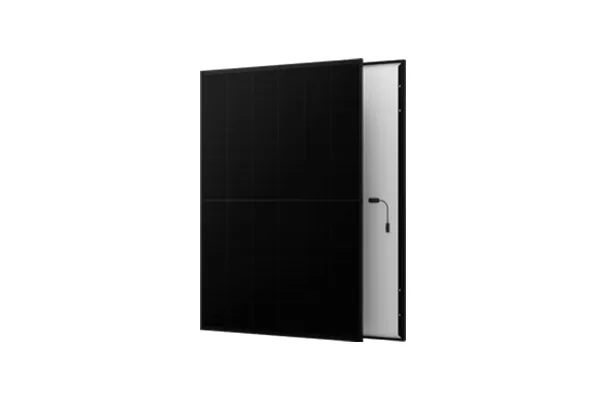
Aiko Neostar 2S
All-back-contact panel with among the highest efficiency available for residential roofs.
Specs & reviewJinko Tiger Neo 3.0
High-volume N-type TOPCon module offering strong output and value on space-constrained roofs.
Specs & review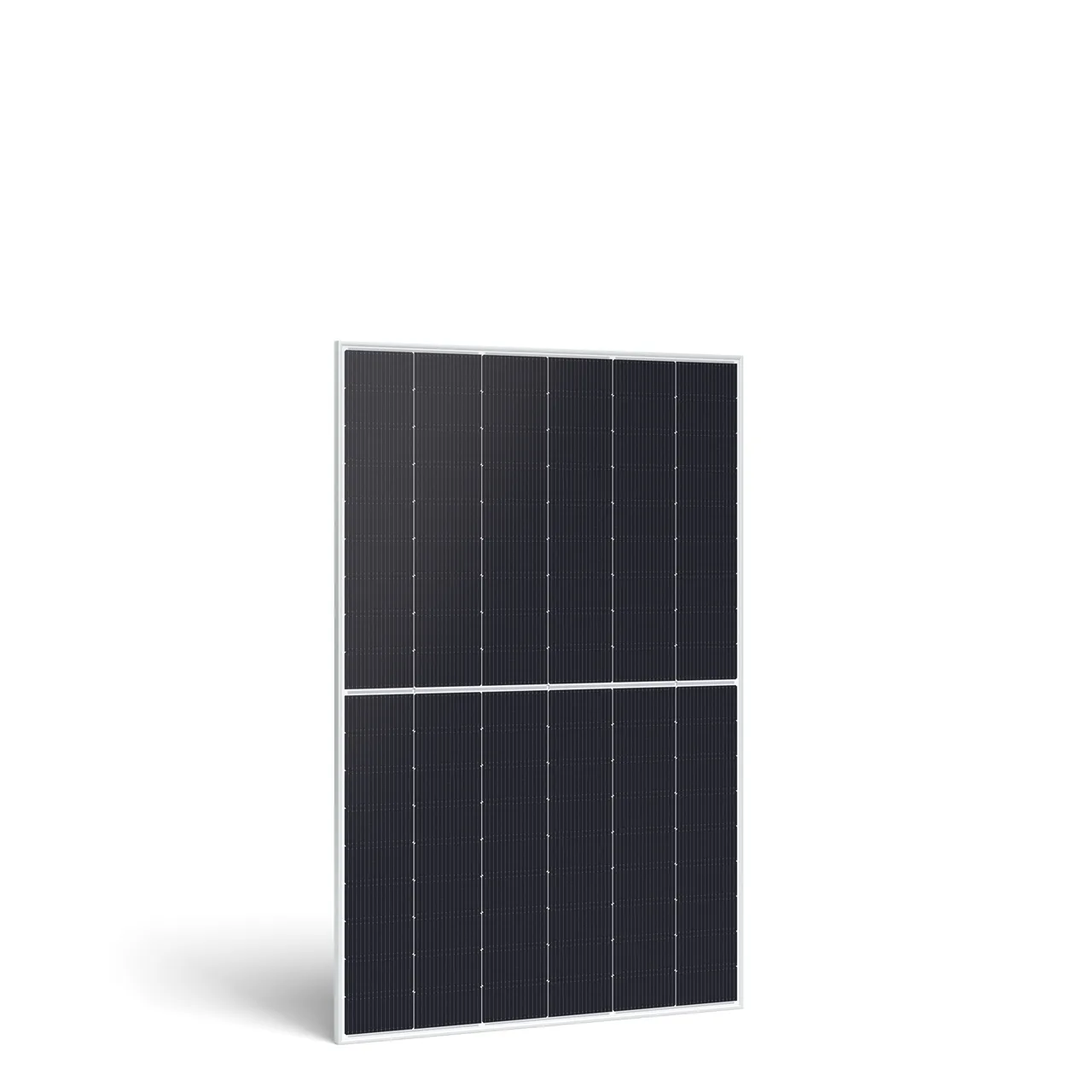
JA Solar DeepBlue 4.0 Pro
Tier-1 N-type TOPCon panel offering a strong balance of efficiency, reliability and price.
Specs & reviewTrina Solar Vertex S+
Compact dual-glass N-type module with a strong 25-year product and 30-year power warranty.
Specs & reviewRelated guides
- Are Solar Panels Worth It in the UK? (2026)
A worked payback for a £7,238 4.4kWp array at three self-use rates and two export tariffs, 7.8 to 14.9 years, and the five cases where the answer is no.
- G98 vs G99: Which DNO Notification Does Your Solar Need? (UK 2026)
G98 covers up to 16A per phase (3.68kW single-phase, 11.04kW three-phase), notified 28 days after. Above that, a G99 application before you install.
- How Long Do Solar Panels Last? (UK 2026)
Panel warranties run 15–30 years and the warranted degradation curves put year-25 output at 89.9–91.0%. Here is the arithmetic, from four manufacturers' own datasheets.
- How Many Solar Panels Do I Need? (UK Guide, 2026)
Work out your solar array size from your annual kWh, with real generation figures by region, orientation and pitch, official UK installation costs, and a worked payback at the October 2026 price cap.