Are Solar Panels Worth It in the UK? (2026)
By Rob Hammond · Updated September 2026 · How we score
PowerGuide is reader-supported. We may earn a commission from links on this page. It never affects our rankings or what we recommend. Learn more
Usually yes, on a payback of roughly eight to fifteen years, and the thing that decides where in that range you land is your export tariff, not your roof. A typical UK array costs £7,238 fitted and returns between £487 and £929 a year depending on two numbers, one of which you can change for free this afternoon. That is a good investment by the standards of anything else you can bolt to a house, and it is a bad one in five specific situations. Here is the arithmetic, and then the five situations.
The two ways solar panels make money
There are only two, and they pay very different amounts.
- Electricity you use yourself. Every kWh your array makes that you consume in the house is a kWh you do not buy. That is worth the full retail rate: 26.32p/kWh on Ofgem’s price cap for 1 October to 31 December 2026.
- Electricity you export. Everything else goes to the grid and earns whatever your export tariff pays. Outgoing Octopus pays a flat 12p/kWh. British Gas pays 3p/kWh on its Export SEG tariff, the one open to people who are not British Gas electricity customers, and 12p on its customers-only Export Premium tariff (rates updated 27 August 2026).
So a self-used kWh is worth 2.2 times an exported one at 12p, and 8.8 times one at 3p. That ratio is the whole game. Every export tariff we could read, from 3p to 25p and what each one demands in return, is in best Smart Export Guarantee rates.
The reason the spread between suppliers is so wide is that there is no floor. Under the Smart Export Guarantee, licensed suppliers designated as SEG Licensees must offer a tariff to eligible generators up to 5MW, but Ofgem requires only that “SEG tariff rates must always be above zero”. Suppliers set the rate, the contract length and the terms themselves. Nothing obliges anyone to pay you a fair price for your exports. Choosing the supplier that does is the single highest-value decision on this page, and it costs nothing.
Two conditions apply either way: you need a smart meter capable of half-hourly export readings and an export MPAN, which your supplier applies to the Distribution Network Operator for. Octopus is explicit that you must already be an Octopus import customer to take Outgoing Octopus.
The worked payback
The example is the same one used across this site, so the guides agree with each other and with the calculator: 4.4kWp, ten 440W panels covering about 20m² of roof, on a south-facing Midlands roof at 35°.
- Generation: 4,360kWh in year one. The European Commission’s PVGIS model puts a Midlands array at 991kWh per kWp at 35° facing south, with PVGIS’s default 14% system losses.
- Cost: £7,238. DESNZ’s Solar PV cost data for 2025/26, published 28 May 2026 and drawn from 177,014 domestic installations, gives a mean domestic cost of £1,645 per kW in the 4–10kW band, VAT included and battery excluded. There is no VAT to add until 31 March 2027.
Now the two variables. Self-use rate is the share of generation you consume rather than export, and export rate is what the rest earns. Here is every combination:
| Self-use | Value of self-use | Export at 12p | Total at 12p | Payback at 12p | Export at 3p | Total at 3p | Payback at 3p |
|---|---|---|---|---|---|---|---|
| 35% | £402 | £340 | £742 | 9.8 years | £85 | £487 | 14.9 years |
| 50% | £574 | £262 | £835 | 8.7 years | £65 | £639 | 11.3 years |
| 65% | £746 | £183 | £929 | 7.8 years | £46 | £792 | 9.1 years |
The arithmetic behind the middle row, in full: at 50% self-use, 2,180kWh of the 4,360kWh is consumed at home and 2,180kWh is exported. 2,180 × 26.32p = £574. 2,180 × 12p = £262. Total £835.45 a year. £7,238 ÷ £835.45 = 8.7 years.
Read the two payback columns side by side, because that is the finding. At 12p the whole range from a poor self-use rate to a good one spans 9.8 to 7.8 years, a gap of two years. At 3p it spans 14.9 to 9.1 years, nearly six. Put differently: moving from a 3p export tariff to a 12p one at an unchanged 35% self-use rate takes five years off your payback, and costs you an afternoon. No hardware decision available to you comes close to that.
It also inverts the usual advice. On a good export tariff, self-consumption barely matters, so there is little point rearranging your life around running the dishwasher at noon. On a poor one, self-consumption is the dominant variable, and the honest response to that is to fix the tariff rather than the behaviour.
We are not going to tell you what your self-use rate will be. It depends entirely on when you are home and what you run, and the widely-quoted “about 50%” has no source we are willing to stand behind. Use the range.
Put your own roof, price, export rate and self-use rate in. The calculator starts on the worked example above (4.4kWp, Midlands, south, pitched, £7,238, 12p, 50%) and updates the URL as you change it, so you can send your numbers to someone or open the solar payback calculator on its own page:
Default follows the DESNZ 2025/26 mean for this size band. Costs fall per kW above 4kW.
Yield from PVGIS; shading is not modelled and can cost far more than the shaded fraction.
Enter a postcode for your grid region's electricity and export rates.
For how the generation figure moves with region, orientation and pitch, see how many solar panels do I need. For where the £7,238 comes from, including the medians that sit well below it, see how much solar panels cost.
What a 25-year horizon actually means
A payback of 8.7 years is only meaningful if the thing is still working at year nine, and still working for a good while after that. Three things matter over the full life.
The panels fade, slowly, and the fade is warranted. Aiko’s Neostar 2S warrants degradation of no more than 1% in the first year and no more than 0.35% a year after that, under a 25-year product warranty and a 30-year performance warranty. Compound that out and year 25 is 99% × 0.9965²⁴ = 91.0% of rated output, and the 25 years together come to 23.74 full years’ worth of generation, an average of about 95%. On our example that is about 103,500kWh. Divide £7,238 by it and the panels generate electricity at 7.0p/kWh over their life, against a 26.32p cap rate. That is the number the payback period is really made of.
The inverter probably will not last 25 years. It is the one component with moving electronics and a hot job, and it is usually the first thing to be replaced. There is no official UK statistic for what a replacement inverter costs fitted, so we are not going to invent one, but it is a real cost that falls somewhere in the middle of the 25 years, it pushes the 7.0p up rather than down, and none of the paybacks in the table above include it. Ask your installer what the inverter’s warranty is and treat anything under ten years as a scheduled expense.
The roof has to outlive the array. Panels are a 25-year asset bolted to a shorter-lived one. That is the subject of the next section.
When solar panels are worth it
You use a lot of electricity during the day. This is the one that moves the self-use column. Ofgem’s typical domestic consumption values, implemented 1 July 2026, run 1,600 / 2,500 / 3,800kWh a year for low, medium and high single-rate households, and 1,900 / 3,400 / 6,100kWh on multi-rate meters. A household at the high end has room to absorb a large share of 4,360kWh; one at the low end does not, as the next section shows. Working from home, an electric shower, an EV charged in daylight or a heat pump all push you up the table.
You can get a good export tariff. At 12p the array pays back inside a decade at any plausible self-use rate. Check what your supplier offers before you sign an installation contract, not after, because on some suppliers’ standard tariffs the same array takes five years longer.
Your roof has 20+ years left in it, and faces anything but north. PVGIS puts south-east at 95% of south, south-west at 93%, east at 80% and west at 78%. An east or west roof at roughly four-fifths of the south figure is comfortably worth doing: a 4.4kWp west array generates 3,401kWh, which at 50% self-use and 12p is £652 a year and an 11.1-year payback. Pitch barely matters at all between about 25° and 50°, which covers nearly every UK pitched roof.
You are not planning to move. The returns are back-loaded by construction; see below.
When the answer is no
This is the part the comparison sites leave out. Each of these is a real case where we would tell you not to bother, and each has a number attached.
A north-facing roof, and nothing else available. PVGIS puts a north-facing Midlands array at 54% of the south-facing figure: 2,355kWh a year instead of 4,360kWh. The cost does not fall by 46% to match, and it does not fall at all. At a 50% self-use rate that is £310 of avoided import plus £141 of export at 12p, or £451 a year, a 16.0-year payback. On British Gas’s 3p Export SEG rate it is £345 a year and 21.0 years, which is most of the panels’ warranted life. And if the north roof is small enough to keep you under 4kWp you also pay DESNZ’s worse £1,955/kW band rather than £1,645/kW. This is the one configuration where the answer is often simply no.
Low consumption plus a poor export tariff. Ofgem’s low single-rate consumption value is 1,600kWh a year, and you cannot self-consume more electricity than you use. That puts an absolute arithmetic ceiling of 1,600kWh on the self-use side, which is only 37% of a 4.4kWp array’s output, and in practice you will be nowhere near it because generation peaks at midday in June. Even at that impossible 100% capture, the remaining 2,760kWh exported at British Gas’s 3p is £83, the self-use is £421, and the total £504 a year is a 14.4-year payback. That is the best case for this household, not the expected one. The fix is not a smaller array: it is a better export tariff, after which the same household’s exports are worth four times as much.
The roof needs work. Aiko’s 25-year product and 30-year performance warranties are longer than the remaining life of a lot of UK roof coverings. If yours has ten years left, you will pay to strip the array off and refit it right in the middle of a 9-to-15-year payback, and pay again for the roofing job underneath. There is no sourced UK figure for what a strip-and-refit costs, so we are not going to put one on it, but it is clearly not nothing and it lands at the worst possible point in the cash flow. Do the roof first, then the panels.
You are moving within five years. At the central 8.7-year payback, five years of £835 recovers £4,177 of £7,238, or 58%. On the 3p export column it is £3,196, or 44%. The obvious rejoinder is that the array adds to the sale price, and it may; but there is no reliable UK figure for how much, and we are not going to invent one to rescue the case. If the move is a firm plan rather than a vague one, this is a no.
Shading you cannot remove. Every derate on this site, 54% for north, 80% for east and 83% for a flat roof, is a PVGIS number you can check. There is no equivalent published figure for shading, because its effect is not proportional: a chimney or a neighbour’s tree across part of an array can cost far more than the shaded fraction suggests, depending on how the strings are wired. A shaded array can easily land in north-roof territory, which is the 16.0-year payback above, and panel-level optimisers or microinverters cost extra to mitigate it. This is the one variable a model cannot give you: get a site-specific shading assessment before you commit, not a number off a web page.
And the question that usually comes next: should I add a battery to make the numbers work? Not for the solar. Storing generation instead of exporting it earns the gap between 26.32p and your export rate, minus round-trip losses, about £114 a year on our worked example, a 43.8-year payback on a £4,999 battery. Batteries earn their keep on cheap overnight import, not on solar; the full arithmetic is in are solar batteries worth it.
What changes in 2027
Two dated changes, pulling in opposite directions.
VAT on the installation returns on 1 April 2027. HMRC’s Notice 708/6 zero-rates both the energy-saving materials and their installation in residential accommodation until 31 March 2027, after which the 5% reduced rate returns. On a £7,238 system that relief is worth about £362. It is the only broad financial support domestic solar gets, because there is no UK grant for domestic solar generation (see grants and schemes for what does exist), and it has an expiry date on it. £362 is about five months of the central worked example’s savings, so it is a reason not to dawdle rather than a reason to panic.
VAT on your electricity returns on the same date. The government removed VAT from domestic electricity bills from 1 October 2026 to 31 March 2027 (Ofgem), which is why the cap rate is 26.32p. When the 5% returns, the same cap rate becomes 27.64p, and every self-used kWh gets more valuable. Hold the rest of the example steady and the central 50% row goes from £835 to £864 a year, and the payback from 8.7 years to 8.4.
So the two changes roughly offset: installing after April 2027 costs about £362 more but saves about £29 a year more. On those figures the lost VAT relief takes about twelve and a half years of the higher savings to recover, which is an argument for installing before 31 March 2027 if you were going to install anyway. It is not an argument for installing if the sections above said no.
One caveat on all of it, and it cuts both ways. Every payback on this page holds the import rate, the export rate and your consumption fixed for a decade, and none of the three will be. The price cap is reset quarterly. Export tariffs are commercial products that suppliers withdraw and reprice. If retail electricity gets more expensive faster than export rates do, every figure here is pessimistic; if export rates collapse, the 3p column is the one to read. What does not change is the 7.0p/kWh generation cost, because that is fixed on the day you pay for the array.
Compare panels on our solar panels page, or start from the solar hub.
All prices, rates and figures were checked on 21 September 2026. The price cap is reset quarterly, so re-check before committing.
What’s changed (changelog)
- 21 September 2026. First publication. Built on the PVGIS Midlands yield, the DESNZ Solar PV cost data 2025/26 mean domestic cost, the Ofgem cap rate for 1 October to 31 December 2026, and two named, current export tariffs, Outgoing Octopus at 12p and British Gas Export SEG at 3p, so the payback is given as a range across the export rates people actually get rather than a single flattering number. No figure is published for a replacement inverter, a strip-and-refit of the array, or what solar adds to a sale price, because no official UK statistic for any of the three exists.
FAQs
Are solar panels worth it in the UK in 2026?
For most south, east or west-facing roofs with twenty years of life left in them, yes, but the payback is 7.8 to 14.9 years, not the three or four years the sales pitch implies. A 4.4kWp array at DESNZ's mean domestic cost of £7,238 generates about 4,360kWh a year on a Midlands roof at 35° on PVGIS. Against the 26.32p Ofgem cap rate and a 12p Outgoing Octopus export tariff that is £742 to £929 a year depending on how much you use yourself. On British Gas's 3p Export SEG rate it is £487 to £792.
How long do solar panels take to pay for themselves?
On our worked example, 8.7 years at a 50% self-use rate and a 12p export tariff. The export tariff moves it more than anything else you control: the same array on British Gas's 3p Export SEG rate takes 11.3 years. Nothing about the hardware changes that: switching export tariff is free and changes the answer by two and a half years.
Do solar panels still work on a north-facing roof?
They generate, but the economics usually fail. PVGIS puts a north-facing Midlands array at 54% of the south-facing figure, 2,355kWh a year rather than 4,360kWh, while the £7,238 cost does not fall at all. At a 50% self-use rate and 12p export that is a 16.0-year payback, and 21.0 years on a 3p export rate.
Is it worth getting solar panels if I am moving house soon?
Probably not. At the 8.7-year central payback, five years recovers about £4,177 of a £7,238 outlay, or 58%. There is no reliable UK figure for what a solar array adds to a sale price, so we are not going to claim you get the rest back on the sale.
Should I add a battery to make solar worth it?
Not for the solar. Storing your own generation rather than exporting it earns the gap between the 26.32p import rate and your export rate, and on our battery worked example that is about £114 a year net of round-trip losses, a 43.8-year payback on a £4,999 battery. Batteries earn their money on off-peak arbitrage, not on solar. See our battery guide for that arithmetic.
Sources
- EC JRC: PVGIS · checked 21 Sept 2026
- DESNZ: Solar PV cost data (2025/26 release, published 28 May 2026) · checked 21 Sept 2026
- Ofgem: energy price cap unit rates, 1 Oct–31 Dec 2026 · checked 21 Sept 2026
- Ofgem: Review of typical domestic consumption values, decision (2026) · checked 21 Sept 2026
- Ofgem: Smart Export Guarantee · checked 21 Sept 2026
- Octopus Energy: Outgoing Octopus · checked 21 Sept 2026
- British Gas: Smart Export Guarantee tariff rates · checked 21 Sept 2026
- Aiko: Neostar 2S54 module page and datasheet · checked 21 Sept 2026
- HMRC: VAT Notice 708/6, energy-saving materials · checked 21 Sept 2026
- Ofgem: price cap will rise 4% from October 2026 (VAT removal) · checked 21 Sept 2026
Related products
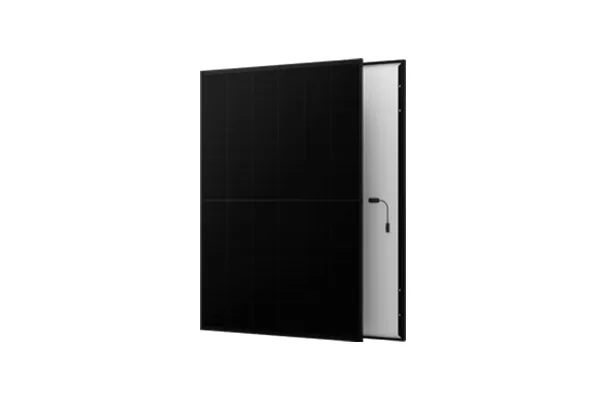
Aiko Neostar 2S
All-back-contact panel with among the highest efficiency available for residential roofs.
Specs & reviewJinko Tiger Neo 3.0
High-volume N-type TOPCon module offering strong output and value on space-constrained roofs.
Specs & reviewTrina Solar Vertex S+
Compact dual-glass N-type module with a strong 25-year product and 30-year power warranty.
Specs & reviewRelated guides
- G98 vs G99: Which DNO Notification Does Your Solar Need? (UK 2026)
G98 covers up to 16A per phase (3.68kW single-phase, 11.04kW three-phase), notified 28 days after. Above that, a G99 application before you install.
- How Long Do Solar Panels Last? (UK 2026)
Panel warranties run 15–30 years and the warranted degradation curves put year-25 output at 89.9–91.0%. Here is the arithmetic, from four manufacturers' own datasheets.
- How Many Solar Panels Do I Need? (UK Guide, 2026)
Work out your solar array size from your annual kWh, with real generation figures by region, orientation and pitch, official UK installation costs, and a worked payback at the October 2026 price cap.
- How Much Do Solar Panels Cost? (UK, 2026)
UK solar costs from DESNZ's official 2025/26 data: £1,955/kW under 4kW, £1,645/kW above it, so a typical 4.4kWp array is £7,238, and generates at about 7p/kWh.