Best Smart Export Guarantee Rates (UK 2026)
By Rob Hammond · Updated September 2026 · How we score
PowerGuide is reader-supported. We may earn a commission from links on this page. It never affects our rankings or what we recommend. Learn more
The Smart Export Guarantee obliges big suppliers to pay you something for your exported electricity, and the word doing the work is “something”. Ofgem sets no minimum beyond “above zero”, so the tariffs on offer on 21 September 2026 run from 3p to 25p per kWh, a factor of more than eight, on identical panels exporting identical electricity. Every premium rate carries a condition, and the conditions are where the money actually is. Here is the whole table, read off the suppliers’ own pages, with what each one demands in return.
What the SEG obliges, and what it does not
The SEG replaced the Feed-in Tariff for installations commissioned after March 2019. Ofgem’s guidance for generators sets out the obligation in one sentence: “Licensed electricity suppliers are required to offer at least one SEG compliant export tariff to any generator with an eligible installation.”
Which suppliers? Ofgem’s page for electricity suppliers makes a supplier a Mandatory SEG Licensee “if they have at least 150,000 domestic electricity customers as at 31 December of the immediately preceding year”. Smaller suppliers may opt in voluntarily; they are not obliged to.
Now the part that decides your income. Ofgem: “The SEG licensees decide exactly how they want their SEG export tariff to work in terms of its rate, type and length. However, the tariff must be greater than zero pence per kilowatt hour exported at all times.”
That is the entire rate regulation. There is no floor, no index, no requirement that the rate bear any relation to the wholesale price or to what the supplier charges you to import. A supplier that pays 3p has met its obligation exactly as fully as one paying 25p. Ofgem’s own text goes on to say so plainly: “Suppliers can compete to offer attractive terms and, if the tariff becomes uncompetitive, you may wish to consider switching to another supplier.”
The eligibility side is tighter. Your installation must be in Great Britain, be one of solar PV, wind, hydro, anaerobic digestion or micro-CHP, and have a total installed capacity of no more than 5MW (50kW for micro-CHP). You cannot hold a SEG tariff with two licensees at once, and you cannot take SEG export payments and FiT export payments on the same installation.
The rates table
Every row below was read on the date in the last column, from the supplier page linked in the tariff name. Rates are what the page published that day; several of these tariffs are explicitly variable, and suppliers reprice them without a public announcement. Sorted by rate, highest first.
| Supplier | Tariff | p/kWh | Import tariff required? | Battery required? | Conditions | Checked |
|---|---|---|---|---|---|---|
| Good Energy | Solar Savings Exclusive | 25p | Yes | Yes | Solar and a battery installed by Good Energy Solar, JPS, Amelio or Empower; fixed for 12 months, then rolls onto Solar Savings at 12p; smart meter; you must switch your electricity supply to Good Energy. | 2026-09-21 |
| OVO Energy | SEG Install Exclusive | 20p | Yes | Yes | OVO must install both the panels and the battery (15p if it installs panels only); installed capacity under 30kW; MCS-certified system, smart meter, battery schematic. | 2026-09-21 |
| So Energy | So Bright Export | 20p | No | No | 20p for 12 months; the page states the export tariffs are open to anyone generating, whether or not So Energy supplies your import; MCS certificate or equivalent, G98/G99 paperwork, proof of ownership and a smart meter. | 2026-09-21 |
| EDF | Export Exclusive 12m V3 | 18p | No | No | You must buy solar, a battery or both from EDF, with the enquiry and purchase after 2 March 2026; solar PV only; up to 50kW; MCS or Flexi-Orb certificate; fixed 12 months, no exit fees. | 2026-09-21 |
| E.ON Next | Next Export Premium v3 | 17.5p | No | No | Solar and/or battery installed by E.ON Installation Services from 10/11/2025; residential, generation up to 15kW; one tariff per property with no renewals; smart export meter and half-hourly data consent. | 2026-09-21 |
| E.ON Next | Next Export Exclusive v3 | 13p | Yes | No | Requires an E.ON Next import tariff, excluding time-of-use tariffs such as Next Drive; residential, generation up to 15kW; fixed 12 months, no exit fees; smart export meter and half-hourly data consent. | 2026-09-21 |
| EDF | Export 12m V2 | 13p | Yes | No | Existing residential EDF electricity customers; fixed for one year, no exit fees; MCS certificate and an export meter recording half-hourly intervals; the page restricts its 'Export Exclusive and Export fixed' tariffs to solar PV and to a TIC under 50kW, without naming V2 among them. | 2026-09-21 |
| Octopus Energy | Outgoing Octopus | 12p | Yes | No | You must be an Octopus Energy customer and on a compatible import tariff; variable, so the rate can change with notice; smart meter sending half-hourly export data, plus an export MPAN Octopus requests from your DNO. | 2026-09-21 |
| British Gas | Export Premium | 12p | Yes | No | British Gas electricity customers only, systems up to 15kW; MCS certificate, smart meter, G98/G99 proof of grid connection and an export MPAN; rates updated 27 August 2026. | 2026-09-21 |
| OVO Energy | SEG Beyond Exclusive | 12p | Yes | No | Your electricity supply must be with OVO; installed capacity under 30kW; MCS-certified system and a smart meter; extra rewards if you link the account to OVO Beyond. | 2026-09-21 |
| Good Energy | Solar Savings | 12p | Yes | No | Variable rate for homes whose solar Good Energy Solar (or JPS, Amelio or Empower) installed; smart meter; you must switch your electricity supply to Good Energy, and payments are credited against your bill. | 2026-09-21 |
| Octopus Energy | Prime Outgoing Octopus | 9p | Yes | No | 9p outside prime time and 16p per kWh exported between 16:00 and 19:00, so it only beats the flat 12p if you can shift export into that window; Octopus customers only; fixed 12 months, no exit fees. | 2026-09-21 |
| British Gas | Export Extra | 8p | Yes | No | British Gas electricity customers with systems over 15kW, larger than almost any domestic roof; MCS certificate, smart meter, G98/G99 proof and an export MPAN; rates updated 27 August 2026. | 2026-09-21 |
| E.ON Next | Next Flex Export v1 | 6p | No | No | Open to new and existing customers on any supplier, generation up to 5MW; variable, so the rate changes through the year; MCS or Flexi-Orb certificate, smart export meter and half-hourly data consent. | 2026-09-21 |
| EDF | SEG Export Variable Value | 5.6p | Yes | No | Exclusive to EDF electricity customers; variable with at least five days' written notice of a change; up to 5MW; MCS certificate; quarterly readings if your meter cannot send them automatically. | 2026-09-21 |
| So Energy | So Export Flex | 4.5p | No | No | Open to anyone generating, whatever supplies your import; rate quoted including VAT; up to 5MW; MCS certificate or equivalent, G98/G99 paperwork and a smart meter. | 2026-09-21 |
| OVO Energy | SEG | 4p | No | No | Your electricity supply can be with any provider; up to 5MW (50kW micro-CHP); MCS-certified system or equivalent and a smart meter; no FiT export payments on the same installation. | 2026-09-21 |
| British Gas | Export SEG | 3p | No | No | The tariff for people who are not British Gas electricity customers; MCS certificate, smart meter, G98/G99 proof of grid connection and an export MPAN; rates updated 27 August 2026. | 2026-09-21 |
| EDF | SEG Export Variable | 3p | No | No | Available to anyone, EDF customer or not; variable with at least five days' written notice of a change; up to 5MW; MCS certificate; quarterly readings if the meter cannot send them automatically. | 2026-09-21 |
Read the “import tariff required” column before the rate column. 7 of the tariffs here pay 13p or more; 4 of those are sold only to that supplier’s own electricity customers, and 2 also require a battery. Several of the top rates are really installation deals rather than tariffs: Good Energy’s, OVO’s, EDF’s and E.ON Next’s best rates each require that the supplier fitted the kit, which is a condition you meet at the point of buying an array, not one you can switch onto afterwards.
The highest rate here that asks nothing about who supplies your electricity is So Energy’s So Bright Export at 20p, fixed for 12 months, whose only stated conditions are an MCS certificate or equivalent, G98/G99 paperwork, proof of ownership and a smart meter. Below that, E.ON Next’s Next Flex Export at 6p is the best open rate with no fixed term, though it is variable.
Some tariffs are not in the table, and it matters why. ScottishPower’s SmartGen pages return HTTP 403 to us, so its rates are not checked here rather than copied from a comparison site. Utilita’s SEG help page publishes no rate. And two Octopus products, Agile Outgoing and Octopus Flux, price half-hourly against wholesale, so there is no flat number to put in a column; Flux additionally requires “a solar system and home battery” and that you are “already on an import and export tariff, both with Octopus Energy”. Business and social-landlord tariffs (British Gas Export Extra aside, which we kept because its 15kW threshold is worth knowing) are also out.
Outgoing Octopus by region
Outgoing Octopus is published per grid region, so the Outgoing Octopus page carries a table for all fourteen, refreshed weekly from Octopus’s API (last on 2026-09-28).
On that date every region paid the same 12p, so the row above holds wherever you live.For every Octopus smart tariff with its regional rates, see energy tariffs.
Why the export rate changes the sizing answer
Every kWh your array generates is worth one of two things. Used in the house it saves you the retail rate, 26.32p/kWh on Ofgem’s cap for 1 October to 31 December 2026. Exported it earns your export rate. So a self-used kWh is worth 2.2 times an exported one at 12p, and 8.8 times an exported one at 3p.
Put that on the worked example from how many solar panels do I need: a 4.4kWp array, 4,360kWh a year, £7,238 fitted, 50% used at home. That leaves 2,180kWh exported:
| Export rate | Value of 2,180kWh exported | Plus £574 of self-use | Payback on £7,238 |
|---|---|---|---|
| 3p (British Gas Export SEG) | £65 | £639 | 11.3 years |
| 12p (Outgoing Octopus) | £262 | £835 | 8.7 years |
| 20p (So Bright Export) | £436 | £1,010 | 7.2 years |
The array is identical in all three rows. The roof is identical. £371 a year separates the top row from the bottom, and the only thing that changed is a form you fill in. That is more than the difference between a south-facing and an east-facing roof on the same house.
It also inverts the usual advice about self-consumption. Are solar panels worth it works the payback across three self-use rates at 12p and at 3p: at 12p the whole range from a poor self-use rate to a good one spans 9.8 to 7.8 years, but at 3p it spans 14.9 to 9.1 years. On a poor export tariff you must chase self-consumption, because exporting is nearly worthless. On a good one, timing your washing machine barely registers. Run your own numbers in the solar payback calculator, which takes the export rate as an input for exactly this reason.
The same logic decides whether a battery earns its keep. Storing a kWh rather than exporting it is worth the gap between 26.32p and your export rate: 23.32p on a 3p tariff, 14.32p at 12p, and only 6.32p at 20p. A better export deal makes a battery less attractive for solar-shifting, not more, and the arithmetic is in are solar batteries worth it.
What you need before you can apply
Ofgem’s generator guidance lists three things, and every supplier page we read repeats them.
- Certification. For PV up to 50kW, “applicants will be asked to demonstrate that their installation and installer are suitably certified. … This may be a Microgeneration Certification Scheme (MCS) certificate, but the SEG also recognises that other schemes may be equivelant [sic] to MCS.” EDF and E.ON Next both name Flexi-Orb as the alternative they accept. If your array was fitted by an uncertified installer, no SEG tariff is open to you, which is the single strongest argument for using an MCS installer in the first place.
- A meter that reads export half-hourly. Ofgem: the export “must be metered. That meter must be capable of taking half-hourly measurements”. Octopus specifies “almost all SMETS2 meters and most SMETS1”; E.ON Next requires “a smart export meter and consent for half hourly consumption data collection”. EDF will take quarterly manual readings if the meter cannot send them automatically, which is the exception rather than the rule.
- An export MPAN. A separate 13-digit number from your import MPAN, created by your Distribution Network Operator on the supplier’s request. Octopus’s own timeline puts the DNO step at 1–4 weeks and calls it “the longest part of the application process”. Budget for it.
Most suppliers also want your G98 or G99 connection paperwork and proof you own the system, and OVO and E.ON Next want a schematic diagram if you have a battery.
One misconception worth killing: your export supplier does not have to be your import supplier. Ofgem is explicit that “your SEG licensee can be a different company to your import supplier”, and you may hold a SEG tariff with one licensee at a time. The constraint is commercial. Look at the table again: every rate above 12p bar one asks either for that supplier’s import tariff or for the installation contract, so taking a premium export rate usually does mean moving your import, and moving your import means re-running the sums on your import tariff too. A 20p export rate bought with a bad standing charge is not obviously a win. Our grants and schemes page covers the SEG alongside the other support you may be eligible for.
When the answer is no, and the traps
A premium rate bundled with an expensive import tariff. The export rate is quoted per kWh exported; the import rate is charged per kWh imported, and for most households the import volume is far larger. On our worked example the whole export income at 20p is £436 a year against roughly 2,180kWh of self-use and whatever else the house buys. A supplier-only export tariff that moves your import to a rate 2p worse costs a 3,400kWh household £68 a year, eating a fifth of the gain. Do the subtraction before you switch, not after.
“Up to” rates that need a battery, an installer, or both. Good Energy’s 25p and OVO’s 20p are real, and both require that their company installed the system: Good Energy’s needs solar and a battery, OVO’s pays 15p if it installed panels alone. EDF’s 18p requires buying the kit from EDF after 2 March 2026. These are not export tariffs so much as discounts attached to an installation contract, and they should be compared as part of the installation quote, not as tariffs you can switch to on a Tuesday. If the installation costs £2,000 more than a local MCS installer, the extra 8p/kWh on 2,180kWh, or £174 a year, takes eleven and a half years to recover it.
A peak rate that your generation cannot reach. Prime Outgoing Octopus pays 16p between 16:00 and 19:00 and 9p the rest of the day. Unshaded solar exports around solar noon; without a battery to hold the surplus until four o’clock, most of your kWh land in the 9p band and you have taken a pay cut against the flat 12p. The same trap applies to any wholesale-linked tariff: uncapped upside is also uncapped downside.
And the trap that applies to the whole page: check the date column. These are commercial products with no regulated floor beyond zero. Several are explicitly variable: EDF promises only “at least 5 days” written notice of a change, and Octopus’s flat tariff says rates “can change, but we’ll always give you plenty of notice”. A table of export rates is a photograph, not a contract. Treat the checked date on each row as part of the number, and re-read the supplier’s page before you apply.
If you have not installed yet, start from the solar hub and size the array first, because the export rate changes the payback but it does not change how many panels fit on your roof.
All prices, rates and figures were checked on 21 September 2026. The price cap is reset quarterly, so re-check before committing.
What’s changed (changelog)
- 21 September 2026. First publication. Rates read from the supplier pages of Octopus Energy,
British Gas, E.ON Next, EDF, OVO, So Energy and Good Energy on 21 September 2026, and held as
data in
exportTariffs.tsso the table and the grants entry cannot drift apart. ScottishPower is recorded as not checked because its site returns HTTP 403; Utilita publishes no rate; Agile Outgoing and Octopus Flux are excluded because neither publishes a flat rate. No rate on this page comes from a comparison site.
FAQs
What is the best SEG rate in the UK right now?
The highest domestic rate we could read on a supplier's own page on 21 September 2026 is Good Energy's Solar Savings Exclusive at 25p/kWh, but only for homes whose solar and battery Good Energy Solar (or JPS, Amelio or Empower) installed, and only if you move your electricity supply to Good Energy. The best rate with no requirement to change import supplier is So Energy's So Bright Export at 20p/kWh for 12 months. The lowest we found are British Gas's Export SEG and EDF's SEG Export Variable, both 3p/kWh.
Does the Smart Export Guarantee set a minimum rate?
No. Ofgem's SEG generator guidance says licensees 'decide exactly how they want their SEG export tariff to work in terms of its rate, type and length. However, the tariff must be greater than zero pence per kilowatt hour exported at all times.' Above zero is the only floor, which is why a 3p tariff and a 25p tariff can both be SEG-compliant.
Can I have my export tariff with a different supplier from my import tariff?
Yes. Ofgem's guidance states 'your SEG licensee can be a different company to your import supplier', and you can only hold a SEG tariff with one licensee at a time. The catch is commercial, not regulatory: every rate above 12p on this page bar one requires either that supplier's import tariff or that they installed the system, so in practice taking a premium export rate usually does mean moving your import too.
What do I need before I can get a SEG tariff?
Three things, per Ofgem's generator guidance: certification of the installation and installer, normally an MCS certificate, though the SEG also recognises equivalent schemes; a meter 'capable of taking half-hourly measurements', and an export MPAN, which your SEG licensee requests from your Distribution Network Operator. Octopus quotes 1–4 weeks for the DNO to create the MPAN.
Is a 16p peak export rate better than a flat 12p?
Only if you can move your export into the peak window. Prime Outgoing Octopus pays 16p between 16:00 and 19:00 and 9p for the rest of the day. Solar without a battery exports around midday, so most of your kWh would land in the 9p band, worse than the flat 12p on Outgoing Octopus. The 16p rate is a battery product sold as a solar one.
Sources
- Ofgem: Smart Export Guarantee (SEG) · checked 21 Sept 2026
- Ofgem: Smart Export Guarantee (SEG): Electricity suppliers · checked 21 Sept 2026
- Ofgem: SEG: Guidance for Generators (December 2019) · checked 21 Sept 2026
- Ofgem: energy price cap unit rates, 1 Oct–31 Dec 2026 · checked 21 Sept 2026
- Octopus Energy: Outgoing Octopus · checked 21 Sept 2026
- Octopus Energy: Octopus Flux · checked 21 Sept 2026
- British Gas: Smart Export Guarantee tariff rates · checked 21 Sept 2026
- E.ON Next: Smart Export Guarantee scheme · checked 21 Sept 2026
- EDF: Smart Export Guarantee tariffs · checked 21 Sept 2026
- OVO Energy: Smart Export Guarantee · checked 21 Sept 2026
- So Energy: Smart Export Guarantee · checked 21 Sept 2026
- Good Energy: Solar Savings and Solar Savings Exclusive · checked 21 Sept 2026
Related products
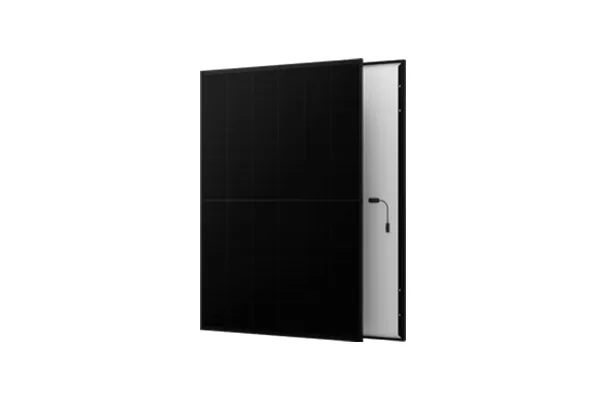
Aiko Neostar 2S
All-back-contact panel with among the highest efficiency available for residential roofs.
Specs & reviewTrina Solar Vertex S+
Compact dual-glass N-type module with a strong 25-year product and 30-year power warranty.
Specs & review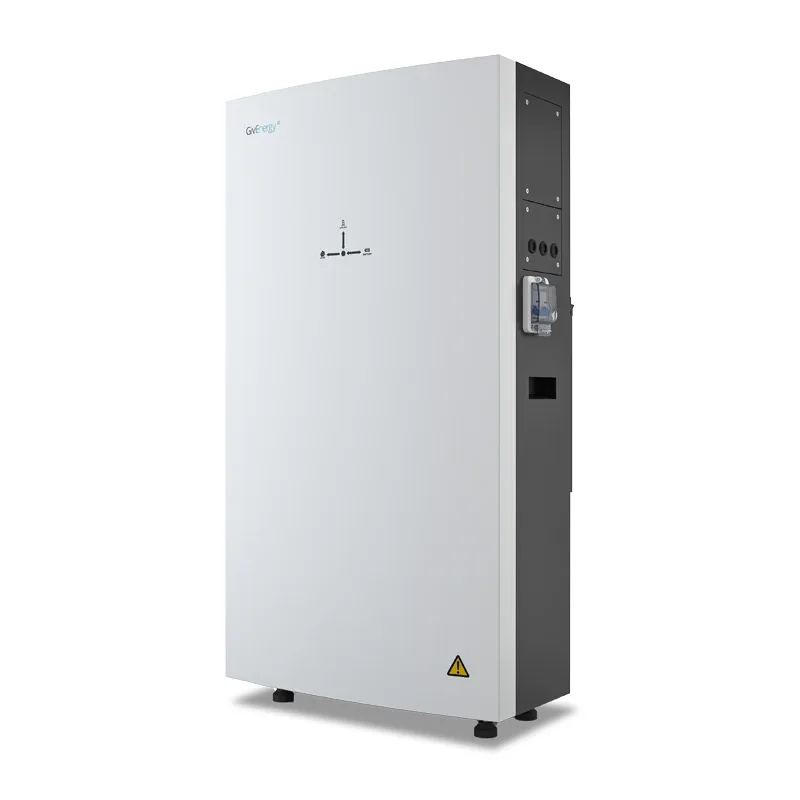
GivEnergy All in One
Integrated battery, inverter and gateway in one cabinet, with whole-home backup. A strong fit for storage on a single unit, but check warranty support given GivEnergy's recent administration.
Related guides
- Are Solar Panels Worth It in the UK? (2026)
A worked payback for a £7,238 4.4kWp array at three self-use rates and two export tariffs, 7.8 to 14.9 years, and the five cases where the answer is no.
- G98 vs G99: Which DNO Notification Does Your Solar Need? (UK 2026)
G98 covers up to 16A per phase (3.68kW single-phase, 11.04kW three-phase), notified 28 days after. Above that, a G99 application before you install.
- How Long Do Solar Panels Last? (UK 2026)
Panel warranties run 15–30 years and the warranted degradation curves put year-25 output at 89.9–91.0%. Here is the arithmetic, from four manufacturers' own datasheets.
- How Many Solar Panels Do I Need? (UK Guide, 2026)
Work out your solar array size from your annual kWh, with real generation figures by region, orientation and pitch, official UK installation costs, and a worked payback at the October 2026 price cap.