The £2,500 Air-to-Air Heat Pump Grant: Air Conditioning on the BUS (UK 2026)
By Rob Hammond · Updated September 2026 · How we score
PowerGuide is reader-supported. We may earn a commission from links on this page. It never affects our rankings or what we recommend. Learn more
There is a UK grant for air conditioning, and almost nobody explains it. GOV.UK’s Boiler Upgrade Scheme pays £2,500 towards an air-to-air heat pump, which is what a reversible split air conditioner is. The catch is not on the GOV.UK page at all: it is in Ofgem’s guidance, and it says the funded system has to meet 100% of the property’s space heating needs. That rules out grant-funding one wall unit for the bedroom, and it makes this a whole-home decision dressed up as an air-con purchase.
A split air conditioner is an air-to-air heat pump
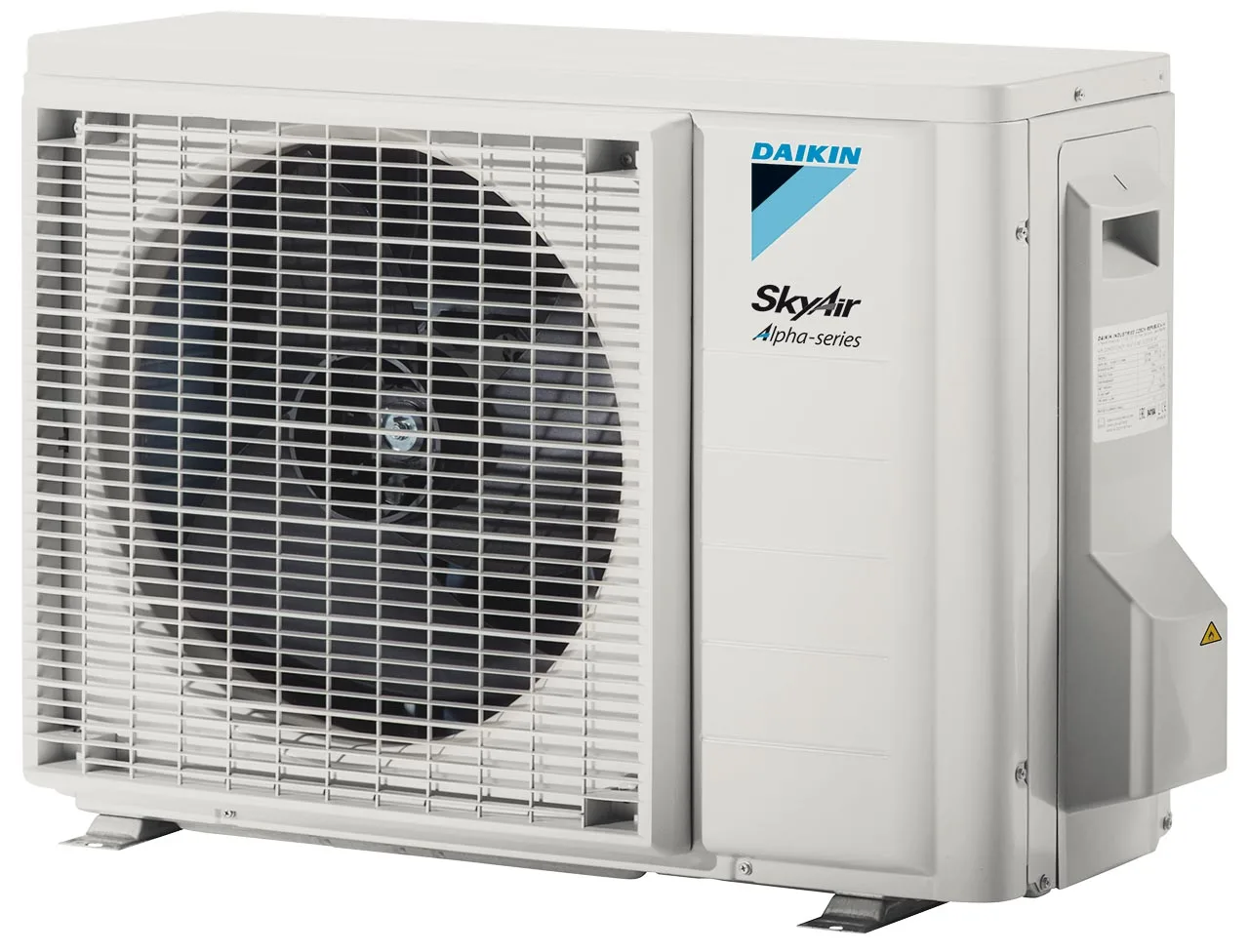
The same machine, described two ways. A split system has an outdoor unit with a compressor and one or more indoor units on the wall, joined by refrigerant pipes. Run the cycle one way and it moves heat out of the room; run it the other way and it moves heat in. There is no separate “heating mode” hardware: it is a heat pump in both directions.
The difference from the heat pump most people mean is what it heats. An air-to-water heat pump warms water for radiators, underfloor pipes and a hot water cylinder. An air-to-air heat pump warms the air in the room directly, through the indoor unit’s fan, and does nothing at all for your taps. GOV.UK’s own wording keeps the two apart in the grant table, calling the £7,500 award “air source heat pump (sometimes called an air-to-water heat pump)” and listing the £2,500 award separately as “air-to-air heat pump”.
HMRC agrees, for what it is worth, and in blunter language. VAT Notice 708/6 says that fixed air source heat pumps “can be reversed so that they can draw heat from inside a building, thus providing cooling during the summer as well as indoor heating for colder periods of the year”, and then: “HMRC’s understanding is that most air conditioning units are air source heat pumps.”
You can browse the units this applies to on our air conditioning hub and in the split system category.
What the £2,500 covers, and the condition GOV.UK leaves out
The grant levels on GOV.UK are:
| Technology | Grant |
|---|---|
| Air source heat pump (air-to-water) | £7,500 |
| Ground source heat pump, incl. water source and shared ground loops | £7,500 |
| Biomass boiler | £5,000 |
| Air-to-air heat pump | £2,500 |
| Off-gas uplift (oil or LPG, no mains gas), air or ground source | +£1,500, until March 2027 |
One grant per property, and the general eligibility test is the same as for any other BUS technology: you must “own the property you’re applying for (including if it’s a business, a second home, or a property you rent out to tenants)” and “be replacing fossil fuel heating systems - such as oil, gas, electric or LPG”. Electric is on that list, which is the single most useful fact in this guide if you live in a flat with storage heaters. Most new builds, social housing and properties that have already had government funding for a heat pump are excluded, and your installer must commission within 120 days of applying. Our Boiler Upgrade Scheme guide works through all of that, plus Ofgem’s uptake figures, in full.
Now the part that is not on GOV.UK. We read both the what-you-can-get and the eligibility pages on 21 September 2026, and neither says anything about main heating, whole homes or single rooms for air-to-air. The condition lives one level down, in Ofgem’s Installer Guidance V5, which applies to applications properly made on or after 28 April 2026. Three paragraphs matter:
- 3.31: “Only residential properties are eligible for air-to-air heat pumps.”
- 3.74: “The heat pump system must have sufficient kilowatt thermal capacity to provide 100% of the space heating needs of the eligible property.”
- 3.75: “The BUS-funded heat pump must be capable of providing the full space heating and hot water heating demand to a property, either on its own or in combination with supplementary heating appliances.”
So there is no sentence anywhere that says “single-room units are excluded”, and we are not going to put quotation marks around one that does not exist. What the rules do instead is set a test that a single-room unit cannot pass. A 3.5kW wall unit in one bedroom is not providing 100% of a house’s space heating, so it is not an eligible BUS installation, whatever the installer’s marketing says.
Two consequences follow, and they cut in opposite directions.
The hot water problem is solvable. An air-to-air system makes no hot water at all, yet 3.75 demands the full hot water demand be met. The escape is the supplementary-appliance route added on 28 April 2026: from paragraph 3.80, a BUS heat pump may sit alongside non-fossil-fuel appliances, and the list at 3.81 includes “hot water heat pumps” and “immersion heaters”. Paragraph 3.72 also lets you retain an existing immersion heater and hot water cylinder. So an immersion or a hot water heat pump does your taps, the splits do the space heating, and the installation qualifies. What you cannot do is keep the gas boiler: property owner guidance 3.21 is flat: “You cannot keep a fossil‑fuel heating system alongside a BUS‑funded installation.”
And the installer has to be certified for this specific technology. Installer guidance 3.01: “Installers must be MCS certified to install the heating system they are applying for under the Boiler Upgrade Scheme.” Not MCS-certified in general, but certified for the system being applied for, which for a £2,500 voucher means air-to-air. Paragraph 3.87 shows how sharp that gate is: exhaust air-to-air units are not banned by the scheme regulations, but “as EAAHPs cannot currently be MCS certified, they are not eligible for support under the scheme at this time”. The certification, not the regulation, is what decides it.
Several indoor units still means one grant. Installer guidance 3.94–3.96 covers multi heat pump systems, explicitly lists “two or more air-to-air heat pumps” as an eligible configuration, caps the combined capacity at 70kWth, and says “only one BUS voucher may be issued for the entire system”. Fitting five wall units does not get you five lots of £2,500. It gets you £2,500.
What it costs to run as heating
Here is the honest version, and it needs a health warning before the table rather than after it.
The efficiency number printed on a split’s label is SCOP, and under the Ecodesign regulation for air conditioners it is a calculated laboratory figure, not a measurement of your house. The regulation defines it as “the overall coefficient of performance of the unit, representative for the whole designated heating season”, computed from binned outdoor temperatures for one of three declared seasons, “average/colder/warmer”, where the average season has a reference design temperature of −10°C. The same regulation builds in an assumed “electric back-up heater” with a COP of 1 for the bins the unit cannot cover on its own.
For air-to-water heat pumps we can put a measured British number next to the label one: the Electrification of Heat project monitored 428 air source heat pumps in real UK homes and found a median SPFH4 of 2.78 against datasheet SCOPs above 4. No equivalent trial has measured air-to-air units in UK homes. We looked, and we are not going to manufacture a derating factor to fill the gap. So read the table below as the top of the range, not the middle of it, and read the 2.78 row as the only line in it that comes from a house rather than a chamber.
There is a second reason to read it as the optimistic end, and it follows from the section above. Every SCOP in the table is a mono-split figure, one outdoor unit serving one indoor head, yet the whole-home job the grant requires is a multi-split, with one outdoor unit driving several heads. Multi-splits are rated as separate products under the same regulation, and their declared SCOPs run routinely lower than the mono-split figures used here, because one compressor modulating across several rooms spends more of its life away from its best operating point. We have used the mono-split numbers because those are the units in our catalogue and the ones you can compare like for like; a real multi-head install should be expected to land below them.
The arithmetic is exactly the one behind our heat pump running cost calculator: Ofgem’s medium gas household at 9,500kWh a year, a measured boiler efficiency of 82.5%, so 7,838kWh of delivered heat; Ofgem’s cap for 1 October to 31 December 2026 at 26.32p/kWh electricity and 7.97p/kWh gas with a 29.68p/day gas standing charge. Gas costs 9,500 × 7.97p = £757 plus £108 of standing charge = £865 a year. The electricity standing charge is paid either way, so it cancels; the gas one only disappears if you cap the supply off.
| System (SCOP) | Electricity for heating | Cost a year | vs £865 on gas |
|---|---|---|---|
| Daikin Perfera / Panasonic Etherea Z / Mitsubishi Kirigamine (5.1) | 1,537kWh | £404 | −£461 |
| Samsung WindFree Avant (4.8) | 1,633kWh | £430 | −£436 |
| Mitsubishi MSZ-AY (4.7) | 1,668kWh | £439 | −£427 |
| Daikin Comfora (4.64) | 1,689kWh | £445 | −£421 |
| Fujitsu ASEH12KMCG / Toshiba Seiya (4.6) | 1,704kWh | £448 | −£417 |
| LG Artcool Mirror (4.0) | 1,959kWh | £516 | −£350 |
| Measured air-to-water median (SPFH4 2.78) | 2,819kWh | £742 | −£123 |
Three caveats that all cut the same way. If you keep the gas supply for a hob, you go on paying the £108 standing charge, and the SCOP 5.1 saving drops from £461 to £353 and the SCOP 4.0 one from £350 to £241. When VAT returns to domestic electricity on 1 April 2027, 26.32p becomes 27.64p while the gas rate does not move, and the same two savings become £441 and £324. And the whole table assumes the units actually achieve their label SCOP across a British winter, with no back-up resistance heat, which is the assumption we have just told you nobody has tested. Even so, the margin is wide: on this household, a system has to fall below an in-situ SPF of about 2.38 before gas wins, and that is a long way beneath a label figure of 4.6.
The £2,500 is small against a whole-home job
The catch in section two has a price attached. The units in the table are 3.5kW-class single splits: one outdoor box, one indoor head, one room. Making that the property’s entire heating system means an indoor unit in every room you want heated, which for a two-bed flat is three or four heads and for a house is more.
Our catalogue’s supplied-and-installed figures for a single 3.5kW unit run from £1,750 for the Toshiba Seiya to £2,600 for the Mitsubishi Kirigamine. These are indicative catalogue estimates, not sourced prices, so treat them as a way to compare units against each other, not as numbers to hold an installer to. For a whole-home multi-split installation there is no published UK median price at all: Ofgem reports BUS spending in aggregate and does not break out air-to-air installation costs, so we are not going to invent a figure. What the arithmetic above does tell you is the shape of it: four heads at single-unit money is several thousand pounds before anyone has touched the outdoor unit or the pipe runs, and £2,500 covers one grant for the lot.
Size the rooms properly before you price anything, with the air con sizing calculator.
Cooling is the bonus the grant does not pay for
This is the genuine advantage over an air-to-water heat pump, and it is the reason people want splits in the first place: the same hardware that heats you in February cools you in July, at no extra capital cost. An air-to-water heat pump can technically do cooling with fan coils, but almost no UK domestic install is configured for it.
Summer running is cheap because the season is short. Take the Daikin Perfera’s SEER of 8.65 against a 3.5kW cooling output, the nominal class figure our catalogue holds, not a rated capacity we have verified against Daikin’s own data sheet. Dividing one by the other gives about 0.40kW of draw at rated output, so roughly 10.65p an hour at the 26.32p cap rate. Eight hours a night for thirty hot nights is about £26. The mid-table LG Artcool, at SEER 6.6, is about 14.0p an hour and £34 over the same thirty nights, an £8 difference across a summer, which is worth remembering when a salesperson leans on efficiency ratings for cooling. Note what that division is and is not: SEER is a whole-season average that already includes thermostat-off and standby consumption, so using it against the rated output gives a rough hourly figure for a unit working at full tilt, not a season average. SEER is a laboratory figure on the same basis as SCOP, and your own hours are the input that matters most, so put them into the air con running cost calculator rather than trusting our thirty nights. Our air con running cost guide works the same arithmetic through for portables as well as splits, and explains why the label’s kWh/annum is a 350-hour European figure rather than a British summer.
What the grant will not do is pay for cooling you were going to buy anyway. BUS funds a heating system; the cooling comes free with the box, and Ofgem does not care either way.
Who this actually suits
- Flats and maisonettes with no wet system. Nowhere to put a cylinder, no radiators worth reusing, and often no permitted route for an air-to-water unit. A multi-split is the realistic low-carbon option, and £2,500 is £2,500.
- All-electric homes on storage heaters or panel heaters. GOV.UK lists “electric” among the systems you can be replacing, so these qualify, and the efficiency jump is the largest available anywhere in the scheme: direct electric heating runs at a COP of 1, so a SCOP above 4 cuts the heating bill by roughly three-quarters rather than shaving a margin off gas.
- Properties where a wet retrofit costs more than the heat pump. If the quote is dominated by pipework, radiators and a cylinder, air-to-air sidesteps all three.
- People who want summer cooling and were going to fit splits regardless. The grant is then a discount on a purchase you had already decided.
When the answer is no
- You have a gas boiler and radiators that work. Take the £7,500 instead. It is three times the money, it makes your hot water, and our heat pump cost guide has the real installed prices and the measured running costs. Ripping out a functioning wet system to fit wall units is a worse job for a smaller grant.
- You only want one unit, for one room. Then buy it and enjoy it, but do not budget for the grant: Ofgem’s 100%-of-space-heating test is not something an installer can waive, and a single-room install is not an eligible BUS installation.
- You cannot find an MCS-certified air-to-air installer. Then there is no voucher, full stop. The refrigeration trade is much larger than the MCS-certified part of it, and an F-Gas qualified engineer who fits splits every week is not the same thing as a company certified under MCS to install air-to-air heat pumps. Ask for the MCS certification and the scope it covers before you ask for a price, because no amount of good installation work makes an uncertified job eligible.
- You cannot lose the gas supply. A gas hob keeps the 29.68p/day standing charge on the bill, which is £108 a year, a quarter of the saving in the table above, for a ring you could replace with induction.
- Wall units in every room are unacceptable to you. This is an aesthetic objection and it is a completely legitimate one. Indoor heads are visible, they sit high on the wall, and there is no version of this system that hides them.
- You are in Scotland or Northern Ireland. BUS is England and Wales only. Home Energy Scotland runs a separate scheme, and Northern Ireland has no heat pump capital grant; the grants page and the Boiler Upgrade Scheme guide cover both.
One thing that applies wherever you are: 0% VAT on the installation, until 31 March 2027. VAT Notice 708/6 zero-rates installing energy-saving materials in residential accommodation “from 1 May 2023 to 31 March 2027”, air source heat pumps are on the list, HMRC’s understanding is that most air conditioning units are air source heat pumps, and, critically, “only air source heat pumps that are permanently fixed and are not portable or moveable qualifies as energy-saving materials”. A fitted split qualifies. A portable on castors does not, and never gets near the grant either.
All grant levels, eligibility wording, rates and figures were checked on 21 September 2026. The price cap is reset quarterly and Ofgem’s scheme guidance is revised periodically, so re-check before committing.
What’s changed (changelog)
- 21 September 2026. First publication. Built on GOV.UK’s Boiler Upgrade Scheme pages, Ofgem’s BUS Installer Guidance V5 and Property Owner Guidance V5.1, the Ofgem price cap for 1 October to 31 December 2026, HMRC VAT Notice 708/6 and the retained Ecodesign regulation for air conditioners. Two corrections to what circulates elsewhere: GOV.UK carries no single-room exclusion in so many words. The constraint is Ofgem’s requirement that the system meet 100% of the property’s space heating need, and there is no UK field-trial measurement of air-to-air seasonal performance, so the SCOP-based costs here are the optimistic end of the range.
FAQs
Can I get a grant for air conditioning in the UK?
Yes, if it is a fixed split system and it becomes your whole-home heating. GOV.UK lists "£2,500 towards an air-to-air heat pump" under the Boiler Upgrade Scheme, and a reversible split air conditioner is an air-to-air heat pump. Ofgem's Installer Guidance V5 (applications properly made on or after 28 April 2026) adds that air-to-air heat pumps are eligible for residential properties only, and that the BUS-funded system "must have sufficient kilowatt thermal capacity to provide 100% of the space heating needs of the eligible property". Checked 21 September 2026.
Does the £2,500 cover a single-room air conditioner?
No. There is no wording on GOV.UK excluding single rooms in so many words, but Ofgem's requirement that the BUS system meet 100% of the property's space heating need does the same job: one 3.5kW wall unit heating one bedroom cannot be the property's heating system. Ofgem's multi-heat-pump rules explicitly allow "two or more air-to-air heat pumps" as one system, with one voucher of £2,500 for the whole thing.
How much does a split air conditioner cost to run as heating?
On the Ofgem cap for 1 October to 31 December 2026 (26.32p/kWh electricity, 7.97p/kWh gas plus 29.68p/day standing charge) and the 9,500kWh medium gas household, a system averaging SCOP 5.1 would use about 1,537kWh of electricity and cost about £404 a year against £865 for the gas boiler. That uses the laboratory SCOP, not a measured figure, because no UK field trial has measured air-to-air seasonal performance, so treat it as the optimistic end.
Do air-to-air heat pumps get 0% VAT?
Yes, for a fixed unit until 31 March 2027. HMRC's VAT Notice 708/6 zero-rates the installation of air source heat pumps in residential accommodation from 1 May 2023 to 31 March 2027, states that "only air source heat pumps that are permanently fixed and are not portable or moveable qualifies as energy-saving materials", and adds that "HMRC's understanding is that most air conditioning units are air source heat pumps". Portable units do not qualify.
Should I take the £2,500 or the £7,500?
If you have radiators and a wet system, the £7,500 air-to-water grant is three times the money for a system that also makes your hot water. The £2,500 air-to-air grant is for properties with no wet system to work with: flats, all-electric homes on storage heaters, places where a cylinder and pipework would cost more than the heat pump.
Sources
- GOV.UK: Boiler Upgrade Scheme: what you can get · checked 21 Sept 2026
- GOV.UK: Boiler Upgrade Scheme: check if you're eligible · checked 21 Sept 2026
- Ofgem: Boiler Upgrade Scheme: Installer Guidance V5 (PDF) · checked 21 Sept 2026
- Ofgem: Boiler Upgrade Scheme: Property Owner Guidance V5.1 (PDF) · checked 21 Sept 2026
- Ofgem: energy price cap unit rates, 1 Oct–31 Dec 2026 · checked 21 Sept 2026
- Ofgem: price cap will rise 4% from October 2026 (VAT removal) · checked 21 Sept 2026
- HMRC: VAT Notice 708/6: energy-saving materials and heating equipment · checked 21 Sept 2026
- Commission Regulation (EU) No 206/2012 (Ecodesign: air conditioners), Annex I: as retained in UK law · checked 21 Sept 2026
- Commission Regulation (EU) No 206/2012, Annex II (reference design conditions): as retained in UK law · checked 21 Sept 2026
- Energy Systems Catapult: Electrification of Heat: heat pump performance data analysis · checked 21 Sept 2026
Related products
Daikin Perfera
Daikin's flagship wall split, pairing class-leading efficiency with genuinely quiet, refined heating and cooling.
Panasonic Etherea Z
A super-efficient A+++ wall unit with nanoe X air purification and built-in Wi-Fi.
Mitsubishi Electric MSZ-AY
Mitsubishi's mainstream wall unit with built-in Wi-Fi and excellent cooling efficiency.
Toshiba Seiya
The value pick: a compact entry-level Toshiba split with a surprisingly good heating SCOP.
Related guides
- How Much Does Air Con Cost to Run? (UK 2026)
A 9,000 BTU portable costs about 20p an hour at the October 2026 price cap; a 3.5kW split costs about 8p. Worked from wattages and Ofgem's rate.
- What Size Air Con Do I Need? BTU by Room (UK 2026)
A 12m² bedroom needs about 6,000 BTU, a 20m² living room 10,000 and a 30m² open-plan space 15,000. Here is the rule that produces those numbers.